How To Extend The Life Of Your Garbage Disposal
Your garbage disposal works harder in July than in almost any other month of the year. Summer produce, backyard cookouts, and a kitchen full of visiting family push a heavy volume of scraps down the drain, and the unit under your sink absorbs all of it. Most homeowners in Phelan, Hesperia, and Victorville never think about that unit until it hums, stalls, or drips into the cabinet below. The good news is that a disposal is one of the simplest appliances in the house to protect, and the steps that protect it cost almost nothing. A standard residential model lasts eight to fifteen years; the gap between the short end of that range and the long end comes down almost entirely to daily habits. Cold water, slow feeding, and a few minutes of cleaning each month do more for the motor than any product on the hardware store shelf. Hard water throughout the Victor Valley adds another layer of wear, since mineral scale builds inside the grinding chamber and coats the drain line just past the outlet. This guide walks through what shortens the life of a disposal, what extends it, and when the smarter move is to call a licensed plumber instead of guessing.
What Shortens The Life Of Your Garbage Disposal
Nearly every disposal failure traces back to one of four causes: the wrong food, the wrong water temperature, chemical damage, or plain neglect. Understanding the mechanism matters, because a disposal does not work the way most people picture it. There are no blades inside the chamber. A spinning plate carries two blunt impellers that fling food outward against a stationary grinding ring, and that ring shreds the waste into particles small enough to flow into the drain line. When something jams that plate, the motor draws excess current and the thermal overload protector trips to save itself. Repeated trips wear the motor windings over time, and a chamber that stays wet with trapped food corrodes from the inside out. The items you send down the drain, the water you run while grinding, and the products you pour in afterward decide how long that assembly survives.
Food Waste That Shortens The Life Of Your Garbage Disposal
Fibrous vegetables cause more disposal jams than anything else in a summer kitchen. Corn husks, celery stalks, artichoke leaves, asparagus ends, onion skins, and rhubarb all contain long strands that refuse to break apart under the impellers. Instead of shredding, those strands wrap around the center hub and the plate like thread around a spool. The motor keeps turning against increasing resistance, heat builds fast, and the reset button pops. Even when the unit survives the moment, a wrapped hub never spins as freely again, and the added drag shortens the working life of the bearings. Corn silk deserves special mention during the summer months, since a single ear can shed enough thread to bind a half horsepower unit. Toss husks, silk, and stalks into the trash or the compost pile instead of the sink. Your disposal was designed for incidental scraps left on a plate, not for the prep work of an entire barbecue.
Starchy foods create a different problem, and this one hides downstream where you cannot see it. Potato peels, rice, pasta, oatmeal, and bread dough absorb water and swell rather than break down. Inside the chamber they form a thick paste that coats the grinding ring and packs into the gap between the plate and the housing. That paste then slides into the drain line and settles at the first bend it reaches, usually the P trap under the sink. A slow drain follows within days, and the standing water in the chamber accelerates corrosion on the metal components. Homeowners often blame the disposal when the actual clog sits eighteen inches past it. Feed starchy waste in very small amounts with plenty of cold water running, or better yet, scrape it into the trash. If your sink already drains slowly after a starch heavy meal, the line likely needs professional clearing rather than another round of grinding.
Grease, bones, pits, and shells round out the list of items that shorten a disposal’s life. Bacon fat and cooking oil pour in as a liquid, then cool and harden on the chamber walls, the drain line, and eventually the branch that ties into your main sewer. Fruit pits from peaches, plums, and avocados are harder than the steel components that hit them, and a pit can chip an impeller or bend the mounting on the plate. Large bones do the same, and even small poultry bones rattle in the chamber and gouge the grinding ring. Coffee grounds pass through the unit easily, which is exactly why people keep adding them; the grounds then settle in the trap and build a dense sludge that traps everything arriving behind it. Eggshells behave similarly, and the thin membrane inside the shell can wrap around the hub. None of these items destroy a disposal on the first pass, and that is what makes them dangerous. The damage accumulates quietly until the day the unit hums and refuses to turn.
Water Temperature And Feeding Mistakes That Shorten The Life Of Your Garbage Disposal
Running hot water while you grind feels correct and does the opposite of what most people expect. Hot water melts the fats and oils clinging to your dishes and plates, turning solid grease into a liquid that flows freely past the chamber. That liquid travels ten or twenty feet into the cooler section of your drain line, then cools and hardens into a ring on the pipe wall. Every hot water cycle adds another layer, and the opening narrows until a full blockage forms. Cold water keeps fat solid, so the impellers can break it into small pieces that flush through and out to the sewer or septic tank. Cold water also keeps the motor housing and bearings from taking on extra heat during heavy use. Set the tap to full cold before you flip the switch, and leave the hot water for washing dishes afterward. This single habit prevents more drain line clogs than any other change you can make in the kitchen.
Overloading the chamber is the second common mistake, and summer is when it happens most. After a family dinner, it is tempting to scrape three plates at once into the sink and hit the switch. The impellers cannot move through a packed chamber, the motor stalls, and the thermal protector cuts power. Each of those stalls stresses the windings and the start capacitor, and enough of them will burn out a unit years ahead of schedule. Feed scraps in small handfuls and give the disposal a few seconds to clear between them. Listen to the motor as you go; a healthy unit returns to a steady high pitch once the load clears, and a laboring sound means you are pushing too fast. A half horsepower unit handles an average household, while larger families and heavy cooks are better served by three quarter or full horsepower models. Matching the unit to your actual kitchen volume prevents the chronic overloading that kills undersized disposals.
Shutting the water off too early is a quieter mistake that costs you just as much. Ground food particles need a strong flow of water to carry them through the trap and into the branch line beyond it. When you kill the tap the moment the grinding sound stops, a slurry of particles settles in the low point of the trap and begins to build. Over months that buildup narrows the pipe, slows the drain, and creates the sour smell people blame on the disposal itself. Keep cold water running for twenty to thirty full seconds after the chamber sounds clear. Doing this after every use costs a negligible amount of water and prevents repeat service calls. If your sink still drains slowly with the disposal running and clear, the problem sits farther down the line. Need a stubborn kitchen line cleared for good? Click here for our hydro jetting service.
Hard Water And Chemicals That Shorten The Life Of Your Garbage Disposal
Water throughout Phelan, Oak Hills, Pinon Hills, and the wider Victor Valley carries a heavy mineral load. Calcium and magnesium leave scale on every surface they touch, and the inside of a garbage disposal is no exception. Scale forms a rough crust on the grinding ring and inside the outlet where the unit meets the drain line. That rough surface grabs food particles that would otherwise flush through cleanly, and the buildup compounds on itself. Scale also collects under the rubber splash guard and around the sink flange, where it holds moisture against metal and encourages corrosion. Homeowners on well water in the outlying areas often see this happen faster than neighbors on municipal supply. A water softener or a whole house filtration system reduces the mineral load reaching every fixture in the house, disposal included. Tired of scale on every fixture in your home? Click here for our water filtration systems service.
Chemical drain cleaners belong nowhere near a garbage disposal. Caustic and acid based products are formulated to sit in a pipe and dissolve organic matter, and a disposal chamber holds that chemical directly against rubber seals, plastic components, and painted metal. The seals degrade, the finish blisters, and leaks develop at the bottom housing where repair is not an option. Those same chemicals also attack older drain lines, and many High Desert homes still have original piping that cannot take the abuse. Bleach causes similar trouble and does nothing useful for a clog. Enzyme based cleaners are gentler and can help with odor, though they will not clear a genuine blockage. When a kitchen line backs up, mechanical clearing by a licensed plumber solves the problem without damaging the equipment. Pouring chemicals into a standing sink often just creates a hazardous pool of caustic water that a technician has to deal with later.
Neglect finishes what everything else starts. A disposal that sits unused for weeks develops rust on the plate and the grinding ring, and the impellers can seize in place. Homes that stand empty during summer travel come back to a unit that hums and will not turn. Running the disposal with cold water for a few seconds every couple of days keeps the internal parts moving and the chamber rinsed. Septic systems, which serve a large share of properties around Phelan and Pinon Hills, add another consideration entirely. Ground food waste increases the solids load in the tank, and heavy disposal use means the tank fills faster than the standard schedule assumes. Households with a disposal on septic should plan on more frequent pumping and should be especially strict about grease. Treating the disposal as part of a larger drainage system, rather than a trash can with a motor, keeps the whole house running properly.
Simple Habits That Extend The Life Of Your Garbage Disposal
Protecting a disposal does not require special tools or expensive products. It requires a short routine you repeat without thinking, the same way you rinse a coffee pot or wipe a counter. The three habits that matter most are a proper flush after every use, a real cleaning once a month, and a bit of extra discipline during heavy cooking seasons. Together they keep the chamber free of trapped food, the drain line clear of buildup, and the motor operating within its designed load. Homeowners who follow this routine routinely get twelve to fifteen years out of a unit rated for eight. Those who ignore it often replace a disposal every five or six years and never understand why. The steps below take almost no time and pay for themselves many times over.
The Daily Routine That Extends The Life Of Your Garbage Disposal
Start the cold water before you touch the switch, and let it run at a strong steady flow. A weak trickle will not carry ground particles through the trap, and a strong flow costs you very little over the course of a meal. Turn the disposal on, then begin feeding scraps in small amounts once the motor reaches full speed. Never dump a pile into the chamber and switch it on afterward, since a packed chamber is exactly the condition that trips the overload protector. Pause between handfuls and listen for the motor to return to its normal pitch. Push scraps down with a rubber spatula or a wooden spoon rather than your fingers, and never reach into the chamber for any reason, even with the power off at the wall. Small pieces grind faster and put less strain on the motor than large chunks forced through all at once. This sequence takes seconds and eliminates the majority of jams before they start.
When the grinding sound clears, resist the urge to shut everything off at once. Let the disposal keep running with cold water for twenty to thirty seconds so the line flushes completely. Turn the disposal off first, then leave the water running for another few seconds to rinse the outlet and the trap. A splash of liquid dish soap during that final flush cuts residual grease on the chamber walls and helps with odor. Wipe down the rubber splash guard every few days with a sponge and warm soapy water, since the underside of that flap collects a film of food and bacteria that causes most kitchen sink smells. Lift each flap of the guard and clean both sides; this one spot is responsible for complaints that no amount of grinding will fix. Check the cabinet underneath once a week for dampness, staining, or a musty smell. Catching a small drip at the flange early keeps a minor repair from becoming water damage to the cabinet floor.
Run the unit regularly even on days when you have nothing to grind. A short burst with cold water every second or third day keeps the plate moving, rinses the chamber, and prevents the rust that seizes an idle disposal. This matters most for second homes, rental properties, and households that travel during the summer. If you are leaving town for an extended stretch, run the disposal with a full flush of cold water right before you go so no food sits in the chamber while you are away. Know where your reset button is, which on most units is a small red button in the center of the bottom housing. Know where the breaker is as well, since cutting power at the panel is the only safe way to work on a jam. Keep the hex wrench that came with the unit taped to the cabinet wall or the pipe so it is there when you need it. Preparation turns a potential emergency into a two minute fix.
The Monthly Cleaning That Extends The Life Of Your Garbage Disposal
Once a month, give the disposal a deeper cleaning than the daily flush provides. Fill the chamber about halfway with ice cubes and add a generous handful of coarse rock salt. Run cold water and switch the unit on, letting it grind the mixture completely. The ice and salt scour the chamber walls, knock hardened debris off the impellers, and scrape residue from the grinding ring. This does not sharpen anything, since there are no blades to sharpen, but the abrasive action removes buildup that a water rinse leaves behind. The noise is loud and completely normal for the thirty seconds it takes. Follow with a full cold water flush to carry the loosened material out of the line. Doing this on the first of every month is easy to remember and takes less than two minutes.
Address odor separately, because a smelly sink is almost never coming from inside the grinding chamber. The source is usually the underside of the splash guard, the ring where the sink flange meets the basin, or a film of grease in the drain line. Pull the rubber guard off if your model allows it, wash it in hot soapy water, scrub both sides with a brush, and reinstall it. For the chamber itself, grind a few thin strips of lemon or lime peel with cold water running. Use small pieces only, since citrus rind is fibrous and large chunks can wrap the hub. Baking soda followed by a small amount of white vinegar helps neutralize odor and loosen light residue; let it foam for several minutes, then flush thoroughly with cold water. Skip the bleach entirely, since it damages seals and does not address the actual source. If a strong sewer smell persists after all of this, the problem lies in the venting or the drain line and needs a professional diagnosis.
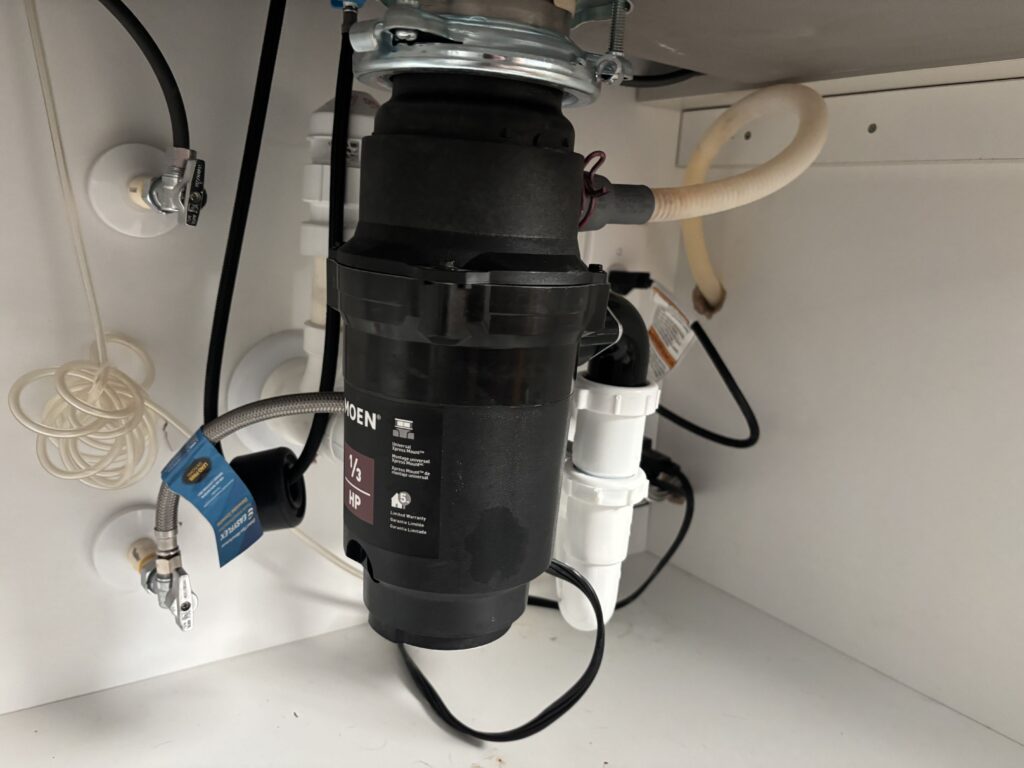
Inspect the hardware while you are under the sink. Check the mounting ring where the disposal attaches to the sink flange and look for water stains or a white mineral crust. Feel the discharge tube connection and the dishwasher inlet hose for dampness, and check that the clamps are tight. Look at the bottom of the housing itself; moisture there indicates a failed internal seal, and a unit leaking from the bottom needs replacement rather than repair. Tighten the drain connections gently by hand and avoid overtightening plastic slip nuts, which crack easily. Note anything that seems off and address it before it turns into a flooded cabinet. Seeing water under your kitchen sink and not sure where it starts? Click here for our leak detection service.
Summer Cookout Habits That Extend The Life Of Your Garbage Disposal
Summer cooking in the High Desert produces exactly the waste a disposal handles worst. Corn husks and silk, watermelon rind, melon seeds, peach and plum pits, and grill grease all show up in volume between June and September. Set a scrap bowl on the counter before you start prepping and use it for everything fibrous, hard, or greasy. That bowl goes in the trash or the compost bin, and the disposal handles only what rinses off the plates afterward. Pour cooled grill grease and bacon fat into an empty can, let it solidify, and throw it away rather than sending it down any drain. Barbecue sauce, marinade, and salad dressing carry more oil than people realize, so rinse those dishes with cold water and dish soap. A few minutes of prep discipline in July prevents the backed up kitchen line that so many families discover on a holiday weekend.
Watch the volume when you have guests. A disposal sized for two people struggles under the load of a household of eight, and repeated overloads during a week of visitors can finish off a unit that was already aging. Space out the dishwashing rather than running everything at once, and give the motor a break between heavy sessions. If the unit trips its reset button more than once during a single cleanup, stop using it and let it cool completely before pressing the button. A disposal that trips repeatedly is telling you something, and continuing to reset and run it will burn the motor out. Households that entertain often are usually better served by a three quarter or one horsepower model with a stainless steel grinding chamber. Upgrading before a busy season costs far less than an emergency call during it. Ready for a stronger unit before the next family gathering? Click here for our garbage disposal installation service.
Do not forget the dishwasher connection while you are thinking about summer load. On most kitchen setups, the dishwasher drains directly into the side inlet of the garbage disposal. A chamber full of standing food waste blocks that inlet and can push water back into the dishwasher, leaving dirty water in the bottom of the tub. Always run and flush the disposal before starting a dishwasher cycle so the path stays clear. Check the dishwasher drain hose for kinks and confirm it loops up high under the counter or connects to an air gap. If your dishwasher has started leaving standing water after cycles, the disposal or the drain line is the first place to look. Keeping both appliances in mind as one system prevents a lot of frustration during the busiest cooking weeks of the year.
Why You Need A Professional For Garbage Disposal Repair And Replacement
Good habits prevent most problems, but every disposal eventually reaches the end of its service life. Knowing the difference between a simple jam and a failing unit saves you money and prevents water damage under the sink. Some issues are genuinely easy to correct at home with the power off and a hex wrench. Others involve electrical connections, drain line modifications, and seals that require a licensed plumber to handle correctly. Rescue Plumbers Inc has served Phelan, Hesperia, Victorville, Apple Valley, Adelanto, Oak Hills, and the surrounding High Desert communities for fifteen years. We give free, no obligation estimates, and our technicians are never paid on commission, so the recommendation you get is the one that actually fits your situation.
Warning Signs That Call For Garbage Disposal Repair
A humming sound with no rotation is the most common symptom homeowners report. That noise means the motor has power but the plate cannot turn, usually because something is lodged between an impeller and the grinding ring. Cut power at the breaker, insert the hex wrench into the socket in the center of the bottom housing, and work it back and forth to free the plate. If the wrench will not budge or the unit hums again immediately after you restore power, the problem is internal and needs a technician. Repeated trips of the red reset button point to a motor drawing too much current, which rarely resolves on its own.
Leaks demand attention right away, and the location tells you a great deal. Water at the top where the unit meets the sink usually means the flange seal or the mounting assembly has failed, and that is often a straightforward repair. Water at the side connections points to a loose discharge tube, a worn gasket, or a failing dishwasher inlet hose clamp. Water dripping from the bottom of the housing means the internal seal around the motor shaft has given out, and no repair will fix that. A unit leaking from the bottom needs to be replaced before it damages your cabinet and floor.
Other signals are easier to overlook but just as meaningful. Persistent odor that survives a thorough cleaning suggests trapped debris in the drain line or a venting issue. A metallic rattling or scraping sound means either a foreign object in the chamber or a broken impeller. Frequent clogs in a sink that used to drain fine indicate buildup in the line beyond the disposal. Slower grinding and a labored motor sound on loads it used to handle easily point to a unit nearing the end. Hearing sounds you cannot identify under the sink? Click here for our garbage disposal repair service.

When Replacement Makes More Sense Than Garbage Disposal Repair
Age is the first factor to weigh. A disposal past the ten year mark that has already needed one repair is usually not worth a second. Motors, bearings, and seals all wear at roughly the same rate, so fixing one component often just moves the failure to the next one. Newer units grind more efficiently and run considerably quieter than models from a decade ago. When repair costs approach half the price of a new installation, replacement is the better value.
Certain failures leave no choice at all. A cracked housing, a leak from the bottom seal, or a burned out motor all mean the unit is finished. Corrosion inside a galvanized or painted steel chamber is another end of life indicator, and it is common in hard water areas like ours. Stainless steel grinding components resist that corrosion and are worth the modest upgrade in the Victor Valley. We will tell you honestly which category your unit falls into.
Installation is where a licensed plumber earns the fee. The mounting assembly has to seat and seal properly against the sink, the discharge alignment has to match your existing trap, and the dishwasher knockout plug must be removed before the inlet is connected or your dishwasher will back up. Electrical connections need to meet code, and hardwired units require different handling than plug in models. Weight and support matter too, especially on thinner sink materials. A proper installation prevents the leaks and vibration problems that plague quick swaps.
Why Choose Rescue Plumbers Inc For Garbage Disposal Repair And Installation
We are a family owned and operated company based right here at 6083 Lindero Rd in Phelan, and we have worked in these communities for fifteen years. Truly local service means we understand the well water, the septic systems, and the older plumbing common in High Desert homes. Our technicians are licensed and insured, and every one of them carries the credentials the trade requires. You will talk to a real person when you call, not an automated system routing you somewhere out of state. That connection is a large part of how we have built our reputation.
Our technicians work on salary rather than commission, which changes everything about the visit. Nobody at Rescue Plumbers Inc earns more by selling you a new disposal when a ten dollar part would solve the problem. We explain what failed, what the options are, and what each one costs before any work begins. Estimates are always free and carry no obligation. You decide, and we respect the decision.
Reach us at (760) 241-3100 or send a message to fixit@rescueplumbersinc.com and we will get you scheduled. We serve Phelan, Pinon Hills, Oak Hills, Hesperia, Victorville, Apple Valley, Adelanto, Wrightwood, Spring Valley Lake, Helendale, Oro Grande, Lucerne Valley, Mariana Ranchos, and Barstow. Bring us in for a repair, a replacement, or a full look at the kitchen drain line behind it. Take care of the small habits, and call us for the rest. Your garbage disposal will last years longer for it.