Why You Should Schedule Drain Cleaning Before The Holidays
The holiday season puts more pressure on your drain lines than any other stretch of the year, and most homeowners never see the trouble coming until a kitchen sink backs up in the middle of dinner. Between the heavy cooking, the additional showers, and the relatives who stay for a long weekend, your pipes handle several times their normal workload in a matter of days. Grease that washed down without complaint in July behaves very differently once nighttime temperatures in Phelan and across the High Desert drop into the thirties and forties. A drain line that has already been narrowed by years of soap film, hair, and food residue has almost no margin left when a full house arrives. Scheduling professional drain cleaning in the fall clears that buildup while your calendar is still flexible and while plumbers still have open appointment slots. It costs far less than an emergency call on a holiday weekend, and it removes the single most common cause of ruined family gatherings in our service area. This guide walks through what actually happens inside your pipes during the holidays, how professional drain cleaning solves it, and when to book the work so you are protected long before the first guest pulls into the driveway.
What Happens To Your Drains During The Holidays
Your plumbing system is sized for the way your household normally lives, not for the way it lives during Thanksgiving week. A home with three people generates a predictable amount of wastewater, and the drain lines have time to fully clear between uses. Add six guests, two days of cooking, and a laundry room running nonstop, and that recovery time disappears completely. The buildup that was sitting quietly along the pipe walls suddenly becomes the difference between a working drain and a standing pool of water in your sink. Most holiday drain failures are not caused by one dramatic mistake; they are caused by months of accumulation meeting a single week of heavy demand. Understanding where that accumulation comes from makes it obvious why cleaning the lines ahead of time is the smarter move.
How Holiday Cooking Causes Drain Clogs
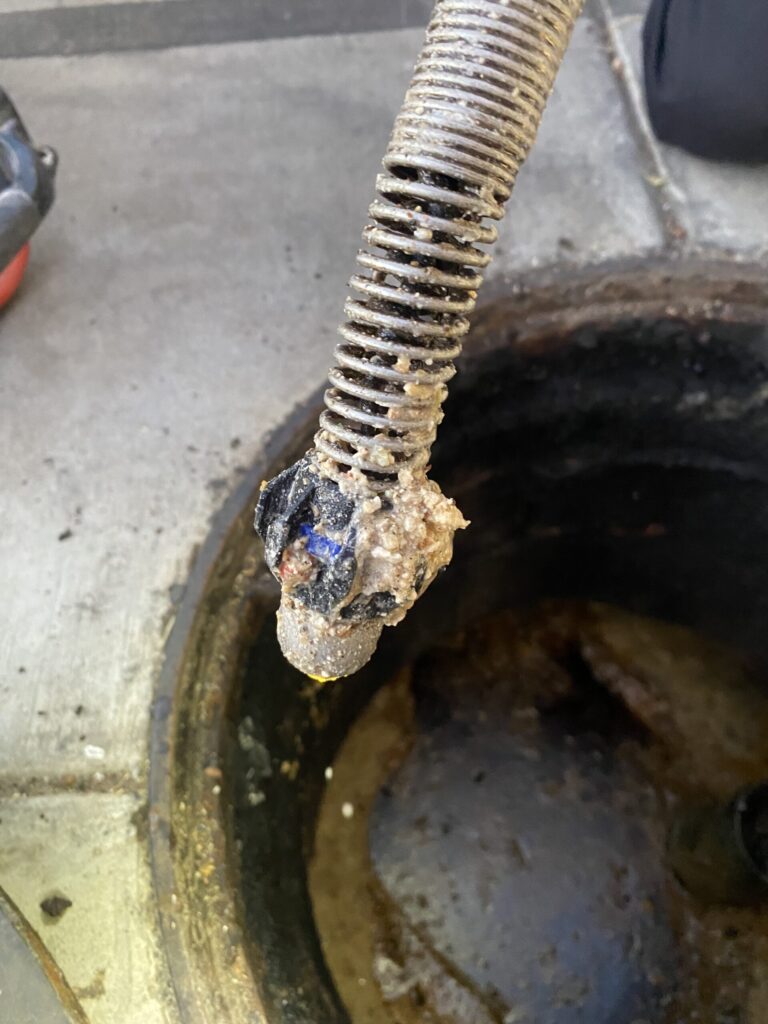
Fats, oils, and grease are the primary reason kitchen drains fail in November and December. When you pour bacon drippings, turkey fat, pan gravy, or melted butter down the sink, it moves through the trap as a warm liquid and gives you no reason to think anything is wrong. A few feet into the line, that grease cools and returns to a semisolid state, and it clings to the pipe wall exactly where it stops moving. Each new pot of drippings adds another layer, and over time those layers combine with soap residue and coffee grounds to form a dense deposit that hot water cannot dissolve. In the High Desert, colder ground temperatures during the fall and winter months mean the grease congeals faster and harder than it does the rest of the year. A standard kitchen branch line is only about an inch and a half across, so it does not take a large deposit to cut the usable diameter in half. By the time the sink drains slowly, that line has usually been closing for months.
Garbage disposals create a false sense of security that makes the problem worse. A disposal grinds food into smaller pieces, but it has no ability to dissolve anything or to move waste through the pipe on its own. Potato peels break down into a starchy paste that behaves like wet cement once it settles into a low spot. Rice, pasta, and oatmeal continue absorbing water after they leave the disposal chamber, and they swell against the pipe wall instead of flushing through. Celery strings, onion skins, corn husks, and artichoke leaves are fibrous enough to wrap around the impellers and travel down the line in mats. Coffee grounds are heavy and settle out of the water stream almost immediately, packing into the trap and the horizontal run. Eggshells contribute a thin membrane that catches on anything already in the pipe. Run cold water for a full twenty seconds after the grinding sound stops so the waste has enough carrier to reach the main line.
The safest habit during the holidays is to keep grease out of the plumbing entirely. Pour cooled drippings into a can, let them solidify, and throw the can in the trash rather than rinsing the pan into the sink. Wipe greasy roasting pans and skillets with a paper towel before they reach the water. Scrape plates into the garbage instead of relying on the disposal to handle a full plate of food. These habits help significantly, but they do not remove the buildup that is already coating the inside of your pipes from previous years. That existing layer is what a professional cleaning addresses, and it is the reason a drain that seems perfectly fine in October fails in late November. If your disposal has been humming, jamming, or draining slowly on top of everything else, that unit needs attention before the cooking starts. Having disposal trouble ahead of the holidays? Click here for our garbage disposal repair service.
How Extra Houseguests Overload Your Drain Lines
Bathroom drains fail during the holidays for a completely different reason than kitchen drains do. Shower and tub lines collect hair, soap scum, skin oils, and hard water mineral deposits that bond together into a spongy mass inside the trap and the vertical run. High Desert water carries a heavy mineral load, and that calcium and magnesium content builds a rough scale on the inside of pipes that gives hair and soap something extra to grab onto. Under normal use, a single household member showers once a day and the line has many hours to fully drain and dry between uses. During a holiday visit, four or five people may shower back to back across a single morning. The line never gets that recovery window, and water begins standing in the tub before the second or third person finishes. What looked like a minor slow drain in the fall becomes a genuine failure with a house full of people.
Toilets face a similar jump in demand that most homeowners never account for. A guest bathroom that gets used twice a week suddenly runs a dozen or more times per day, and the volume of paper moving through that line increases at the same rate. Wipes marketed as flushable are the most common cause of holiday toilet backups, because they do not break apart in water the way toilet paper does. They stay intact, snag on any rough spot or existing buildup in the line, and catch everything that follows behind them. Older toilets and low flow models installed in the nineties move waste with less force than current fixtures, which makes them far more sensitive to an overloaded line. Paper towels, cotton pads, dental floss, and feminine products cause the same trouble and should never enter the plumbing. Placing a lined wastebasket in every guest bathroom prevents more holiday emergencies than any other single step.
Laundry adds a heavy load that people rarely connect to their drain problems. A washing machine discharges fifteen to thirty gallons of water in under two minutes, and that surge has to move through the same branch and main lines as everything else in the house. Lint, sand, and detergent residue settle into the horizontal runs and contribute to the same buildup as kitchen grease. When guests bring extra bedding and towels, that machine may run several cycles a day for a week straight. If your washing machine drain has ever overflowed at the standpipe, or if a nearby shower gurgles or backs up when the machine empties, your line is already restricted and the holidays will expose it. That symptom points to a partial blockage downstream and needs to be cleared before the volume increases. Waiting for it to fail on its own almost always means paying emergency rates.
Warning Signs Your Drains Need Cleaning Before The Holidays
Slow drainage is the earliest and most reliable warning that a line is closing up. A sink that takes thirty seconds to empty after you brush your teeth has lost a meaningful portion of its diameter, and the rate of buildup accelerates once the flow slows down. Gurgling sounds from a drain or toilet indicate that air is being pulled through standing water because the line cannot move waste and air freely at the same time. Foul odors coming from a drain point to decaying organic matter trapped inside the pipe walls or to a venting problem that lets sewer gas into the room. Drain flies hovering near a sink are a definitive sign of a thick organic film inside the pipe, since those insects breed in exactly that material. Water that rises in a shower or tub when a toilet is flushed is the most serious sign of all. That symptom means the restriction is in the main line, not the fixture, and it affects every drain in the house.
Repeated clogs in the same fixture tell you that whatever was done last time only opened a channel through the blockage instead of removing it. A drain snake punches a hole in the middle of a grease or soap deposit and restores flow immediately, which feels like a complete repair. The material coating the pipe wall stays exactly where it was, and it starts capturing debris again within days. This is why so many homeowners clear the same kitchen sink three or four times a year and assume that is normal. It is not normal, and it is a strong signal that the line needs a full cleaning rather than another temporary opening. Any fixture that has clogged more than twice in a year should be addressed before the holidays rather than after.
Homes with mature trees, older cast iron lines, or clay sewer laterals face an additional risk that no amount of careful cooking prevents. Roots seek out the moisture and nutrients inside a sewer line and enter through joints and hairline cracks, then grow into a mesh that catches paper and solids. Cast iron corrodes from the inside over decades and develops a rough, scaled surface that grabs debris at every point. A camera inspection is the only way to see what condition your underground line is actually in, and it turns guesswork into a clear picture of the pipe. That inspection also confirms the exact location and depth of any problem, which saves considerable time and money on repairs. Getting this done in early fall gives you the option to plan any needed work instead of reacting to a backup in the middle of a family gathering. Not sure what shape your main line is in? Click here for our sewer line inspection service.
How Professional Drain Cleaning Prevents Holiday Plumbing Emergencies
Professional drain cleaning is a fundamentally different service than clearing a clog. Clearing a clog restores flow to a blocked line and ends when water moves again. Cleaning restores the pipe to its original inside diameter and removes the material that would otherwise cause the next three clogs. That difference is exactly why a fall cleaning carries a household through a demanding holiday season while a quick snake job in October often does not. A proper cleaning also gives the plumber a chance to identify pipe damage, bellied sections, root intrusion, and venting issues before they turn into failures. You end up with lines that flow at full capacity and a clear understanding of your system’s condition going into the busiest weeks of the year.
What Professional Drain Cleaning Includes
A thorough drain cleaning starts with diagnosis rather than equipment. The plumber runs water at multiple fixtures to determine if the restriction is local to one drain or shared across a branch or main line, since those two situations call for very different approaches. Cleanout locations are identified and opened so the lines can be accessed from the correct point instead of forcing a cable through a toilet or a fixture trap. In many cases a camera goes into the line first, which shows the type of buildup, its exact distance from the access point, and the material and condition of the pipe. That information determines the right tool and the right pressure for the job. Skipping this step is how older or damaged pipes get harmed by aggressive equipment. Diagnosis first is what separates a professional cleaning from a rented machine and a guess.
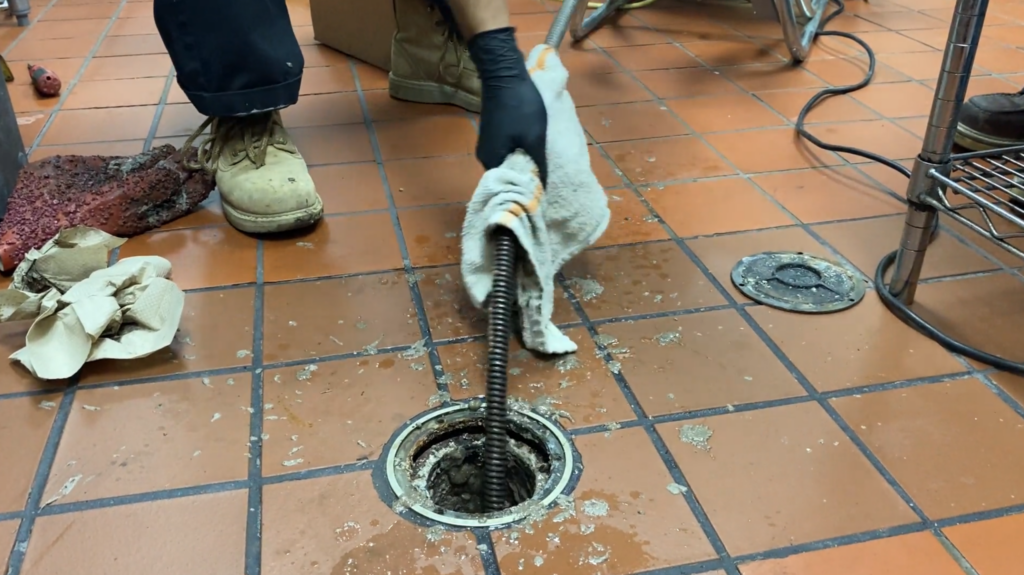
The cleaning itself uses a method matched to the buildup that was found. Motorized cabling with the correct cutter head is effective on solid obstructions, root masses, and paper blockages, and it can also scrape a portion of the softer material off the pipe wall. Hydro jetting uses high pressure water to scour the full circumference of the pipe and is the correct choice for grease, sludge, scale, and soap deposits. Some jobs call for both, with cabling used to open a path and jetting used afterward to clean the walls completely. Kitchen lines, laundry lines, and main sewer lines each get a different nozzle and pressure setting based on pipe size and material. The goal in every case is to return the line to full diameter rather than simply to restore flow.
Good drain cleaning finishes with verification and useful guidance. The plumber flushes the line with a high volume of water and watches the drain rate at multiple fixtures to confirm the entire run is clear, not just the section closest to the access point. A second camera pass shows the cleaned pipe and documents any cracks, offsets, bellies, or root entry points that need monitoring or repair. You get a straight explanation of what caused the buildup and what will keep it from returning, based on your actual system rather than general advice. Access points get sealed properly and the work area is left clean. That combination of cleaning, verification, and documentation is what makes the service worth scheduling ahead of the holidays instead of during them.
Why Hydro Jetting Is The Best Drain Cleaning Method For Holiday Grease
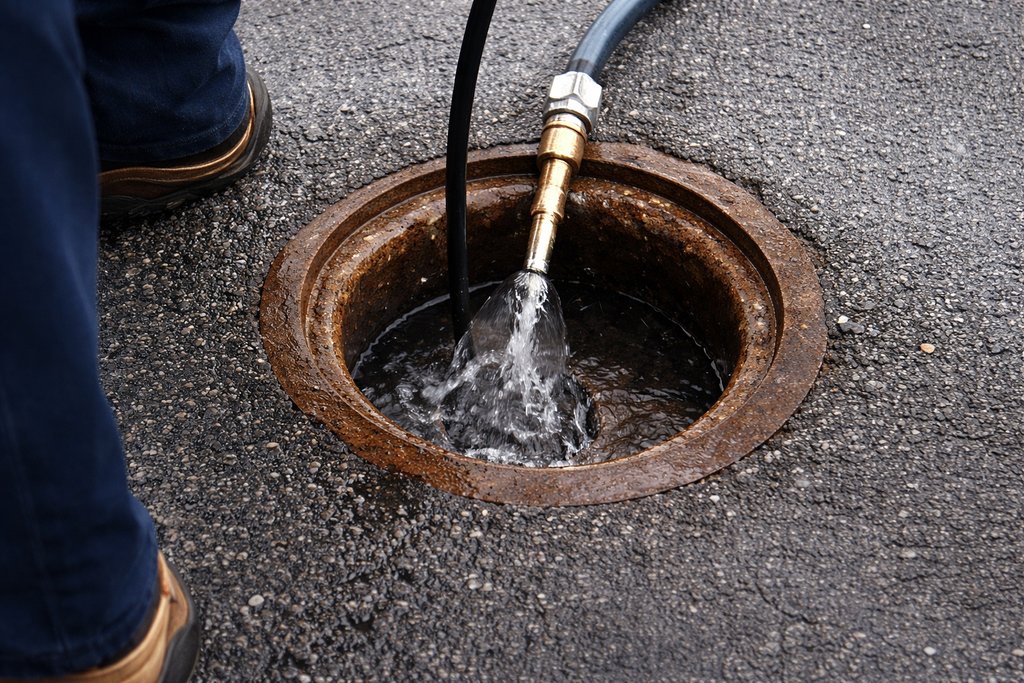
Hydro jetting delivers water through a specialized nozzle at pressures that typically range from fifteen hundred to four thousand PSI depending on the line. The nozzle directs jets backward against the pipe wall, which pulls the hose forward through the line while scouring the entire inside surface. Grease, soap film, mineral scale, sludge, and food residue are cut away from the wall and flushed downstream to the sewer or septic system. A cable cuts a hole through a grease deposit; jetting removes the deposit. That distinction matters enormously for kitchen lines heading into a season defined by cooking. A properly jetted line returns to something very close to its original inside diameter, which is the entire point of doing the work before the holidays. It also buys far more time before the next service is needed.
The method works on the buildup that other tools cannot touch. Grease is soft and slick, so a cable tends to bore straight through it without pulling much material out of the pipe. Mineral scale from High Desert hard water bonds tightly to the pipe wall and requires either mechanical scraping or high pressure water to release. Fine root hairs that survive a cutter head get flushed out completely by jetting. Sludge that has collected in a bellied section, where the pipe has settled and holds standing water, gets pushed through instead of accumulating further. For homes on septic systems, clearing the lateral properly also protects the tank inlet from repeated partial blockages.
Hydro jetting is powerful, and that is exactly why it should be performed by a licensed plumber who has inspected the line first. Pipe material and condition dictate the pressure and nozzle selection, and older cast iron or damaged ABS requires a more conservative approach than modern PVC. A camera inspection before jetting confirms the line can safely handle the work and reveals any structural damage that needs repair rather than cleaning. Attempting this with rented equipment risks injury and pipe damage, and it usually fails to reach the section that actually matters. Done correctly, a single jetting service in the fall carries most households through the entire holiday season and well beyond. Ready to clear grease out of your lines before the cooking starts? Click here for our hydro jetting service.
Why Store Bought Drain Cleaners Fail Where Professional Drain Cleaning Works
Chemical drain cleaners are the most common first response to a slow drain and one of the least effective. Most of these products rely on sodium hydroxide or sulfuric acid, which generate significant heat as they react with the material in the pipe. That heat is the real problem, because it can soften and warp PVC, damage the rubber gaskets in older connections, and degrade the seals inside a garbage disposal. In a line that is fully blocked, the chemical simply sits in a pool on top of the clog and stays there, concentrating against the pipe and the trap instead of dissolving the obstruction. The product also creates a serious hazard for anyone who works on that line afterward, since the caustic liquid can splash back when the trap is opened. Repeated use accelerates corrosion in metal drain lines rather than protecting them.
Even when a chemical cleaner appears to work, it does not accomplish what a cleaning accomplishes. It may open a narrow channel through soft buildup and restore some flow, which reads as success. The hardened material coating the pipe wall remains completely untouched, so the drain slows down again within a few weeks. Homeowners then buy a stronger product, and the cycle repeats while the pipe continues to close and the wall keeps taking chemical exposure. Money spent on bottle after bottle usually exceeds the cost of having the line cleaned properly one time. The pipe ends up in worse shape than when the cycle started.
Enzyme based maintainers occupy a different and more useful category. These products use bacteria and enzymes to digest organic material slowly, and they are safe for all pipe materials and for septic systems. They are a maintenance tool, not a repair tool, and they cannot clear an existing blockage or remove hardened grease. Used monthly in a line that has already been professionally cleaned, they help slow the rate at which new buildup forms. The correct sequence is to have the line cleaned first, then maintain it with enzymes and good habits. That approach keeps drains open through the holidays and reduces how often professional service is needed in future years.
Why You Need To Book Drain Cleaning Before The Holiday Rush
Timing is the part of this that homeowners consistently underestimate. Plumbers across the High Desert book out quickly once the weather turns, and the days surrounding Thanksgiving, Christmas, and New Year’s are the busiest of the entire year for drain emergencies. When a main line backs up on a holiday afternoon, you are competing for an appointment with every other household in the same situation. Booking a cleaning in advance gets you a normal appointment at a normal rate with time to address anything the plumber finds. It also turns a stressful, unplanned expense into a scheduled item you controlled from the start.
The Best Time To Schedule Drain Cleaning Before The Holidays
Early fall through the first half of November is the ideal window for this work. Scheduling in that range means the lines are clear before heavy cooking begins and before guests arrive, and it leaves room to handle any repair the inspection uncovers. Appointment availability is still good, so you can pick a time that fits your work schedule instead of taking the first opening left. Weather is also cooperative, which matters for any work involving an outdoor cleanout or a sewer lateral. Waiting until the week of a holiday means competing with every homeowner who noticed a slow drain at the same time you did.
Certain households should treat this as an annual item rather than an occasional one. Homes with a septic system, mature trees near the sewer line, cast iron or clay piping, or a history of recurring clogs benefit from a yearly cleaning regardless of symptoms. Rental properties and homes that host large gatherings fall into the same category because of the sheer volume of use. A yearly schedule catches buildup while it is still easy to remove and keeps small problems from becoming excavation projects. It also gives you a running record of your pipe condition from one inspection to the next.
Booking early gives you options that an emergency never provides. If the camera reveals a cracked section, a root intrusion point, or a bellied run, you can get an estimate, compare your choices, and plan the repair on your own timeline. During a holiday backup, the only realistic choice is whatever gets the water flowing right now. Planned work is almost always less invasive and less expensive than reactive work on the same problem. That control is the real value of scheduling ahead.
What Drain Cleaning Before The Holidays Costs Compared To An Emergency Backup
A scheduled drain cleaning is a predictable expense with a known scope. You get an estimate before any work begins, the appointment happens during normal hours, and the price reflects standard rates. An emergency call on a holiday weekend costs substantially more for the same labor, and it comes with none of the flexibility. The gap between those two numbers is usually large enough on its own to justify booking in the fall.
The cost of the plumbing call is often the smallest part of a real backup. Sewage that overflows through a floor drain or a tub contaminates flooring, drywall, baseboards, and anything stored nearby, and that material requires professional cleanup rather than a mop and a bucket. Water damage restoration, replacement flooring, and drywall repair can run many times the price of the plumbing work itself. Many homeowner policies limit or exclude coverage for sewer backups without a specific rider. A cleaning that prevents the event avoids all of it.
There is also a cost that does not appear on any invoice. A backup during a family gathering ends the gathering, and the people you invited spend the evening watching you deal with a flooded bathroom. Guests may need to leave, meals get abandoned, and the day you planned for months disappears. No repair afterward gets that day back. Preventive cleaning protects the occasion as much as it protects the house.
Why Choose Rescue Plumbers Inc For Drain Cleaning Before The Holidays
Rescue Plumbers Inc is a family owned and operated company that has served Phelan and the surrounding High Desert for fifteen years. We are licensed and insured, and every technician who comes to your door holds real professional credentials. We know the water chemistry in this region, the pipe materials common in local homes, and the way seasonal temperature swings affect drain lines here. That local knowledge means faster diagnosis and fewer return visits. You are working with neighbors who live in the same conditions your home does.
Our service is non commission based, which changes the entire conversation. Our technicians have no financial reason to recommend work you do not need, so the assessment you receive reflects the actual condition of your plumbing. We provide free, no obligation estimates before any work starts, and we explain what we found in plain language you can act on. If a drain simply needs cleaning, that is what we tell you. If the camera shows damage that cleaning cannot fix, we show you the footage and walk through your options.
We serve Phelan, Adelanto, Apple Valley, Hesperia, Victorville, Oak Hills, Pinon Hills, Wrightwood, Barstow, Helendale, Lucerne Valley, Oro Grande, Spring Valley Lake, and Mariana Ranchos. Getting your drains cleaned now means one less thing to worry about when the house fills up and the oven has been running all day. Call Rescue Plumbers Inc at (760) 241-3100 or email fixit@rescueplumbersinc.com to reserve a fall appointment. We are located at 6083 Lindero Rd, Phelan, CA 92371, and we would rather clear your lines in October than dig you out of a backup in December. Book it once, and enjoy the holidays without listening for a gurgle in the other room.