
Tankless Water Heater Vs Traditional Systems In Phelan CA
If you live in Phelan, CA, you already know that the high desert climate puts unique demands on your home’s plumbing and appliances. The wide temperature swings between summer heat and cold winter nights, combined with the hard water that comes from the local water supply, mean that every piece of equipment in your home works harder than it might elsewhere. Your water heater is no exception. When the time comes to replace an aging unit or upgrade to something more efficient, homeowners are faced with a choice that feels more complicated than it probably should: go with the familiar tank-style system you have always known, or make the switch to a tankless unit that promises lower bills and a longer lifespan.
Neither option is a perfect fit for every home. The right choice depends on how much hot water your household actually uses, what your budget looks like right now versus over the next decade, and how the specific conditions in Phelan might affect each system’s performance. Understanding both options clearly is the first step toward making a decision you won’t regret.
How Each System Works
A traditional water heater, also called a storage tank heater, operates by keeping a large reservoir of water heated to a set temperature around the clock. When you turn on a hot water tap, heated water flows from the tank while cold water enters the bottom to be reheated. Tank sizes typically range from 30 to 80 gallons, and the unit runs continuously to ensure water stays at your target temperature whether you need it right now or not.
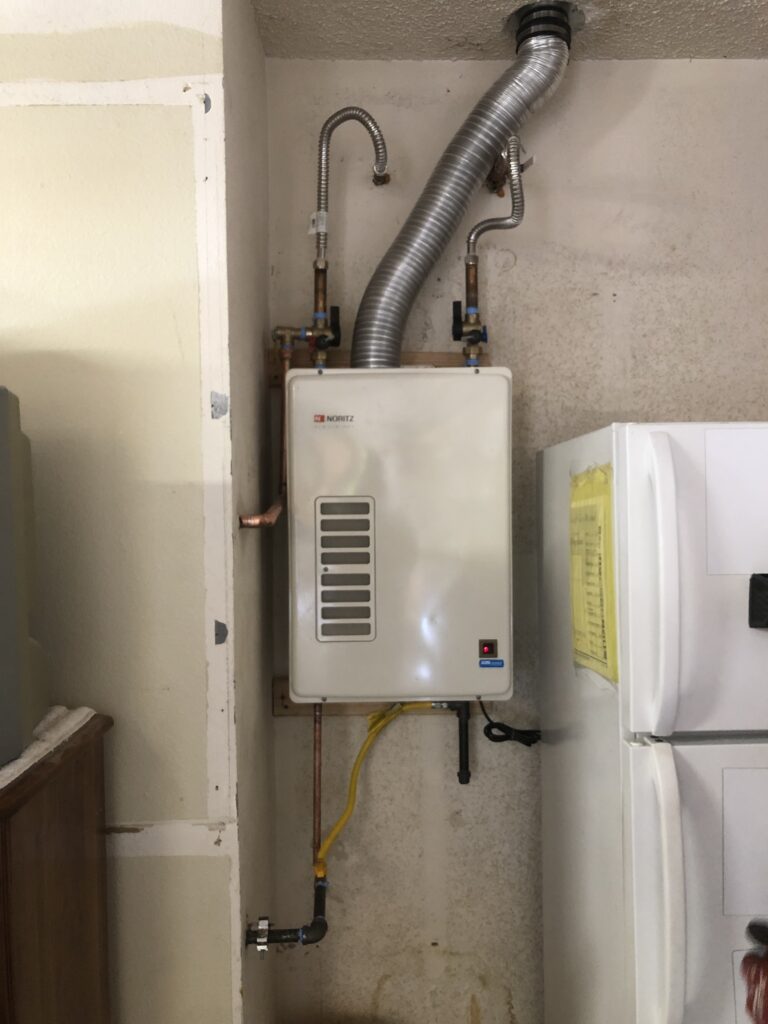
A tankless water heater, sometimes called an on-demand water heater, takes a completely different approach. Rather than storing preheated water, it uses powerful gas burners or electric heating elements to heat water directly as it flows through the unit. When you open a hot water tap, cold water travels through the heat exchanger and arrives at the faucet within seconds, heated to your desired temperature. When the tap closes, the unit shuts off entirely. There is no tank, no stored water, and no constant energy draw when the system sits idle.
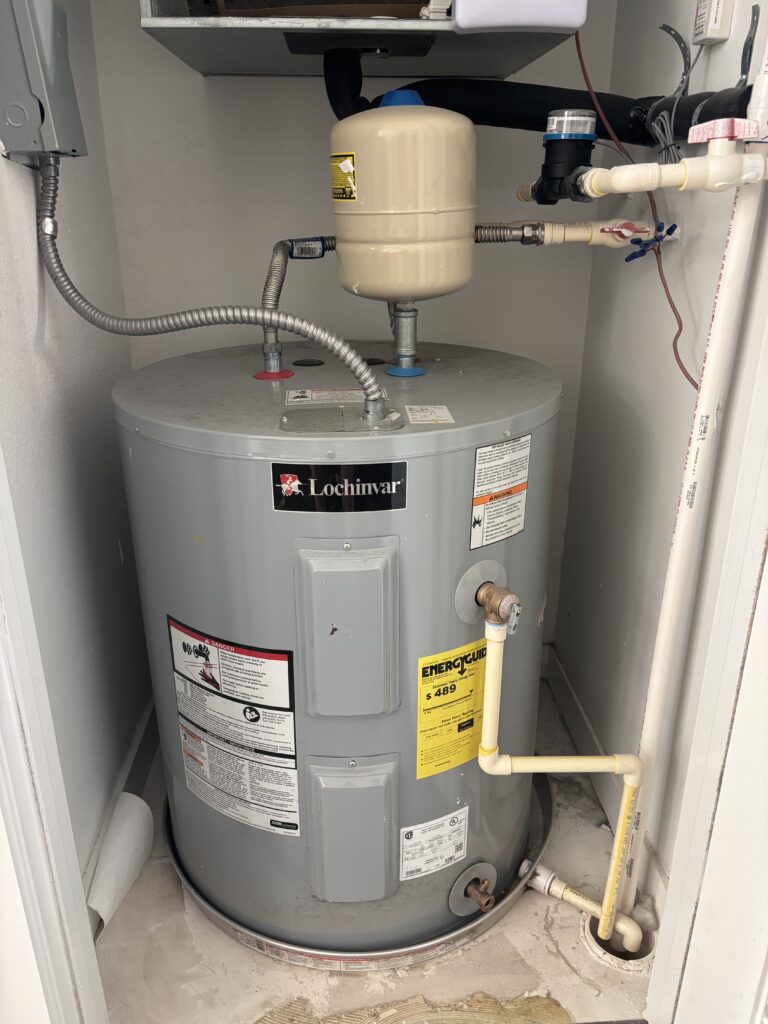
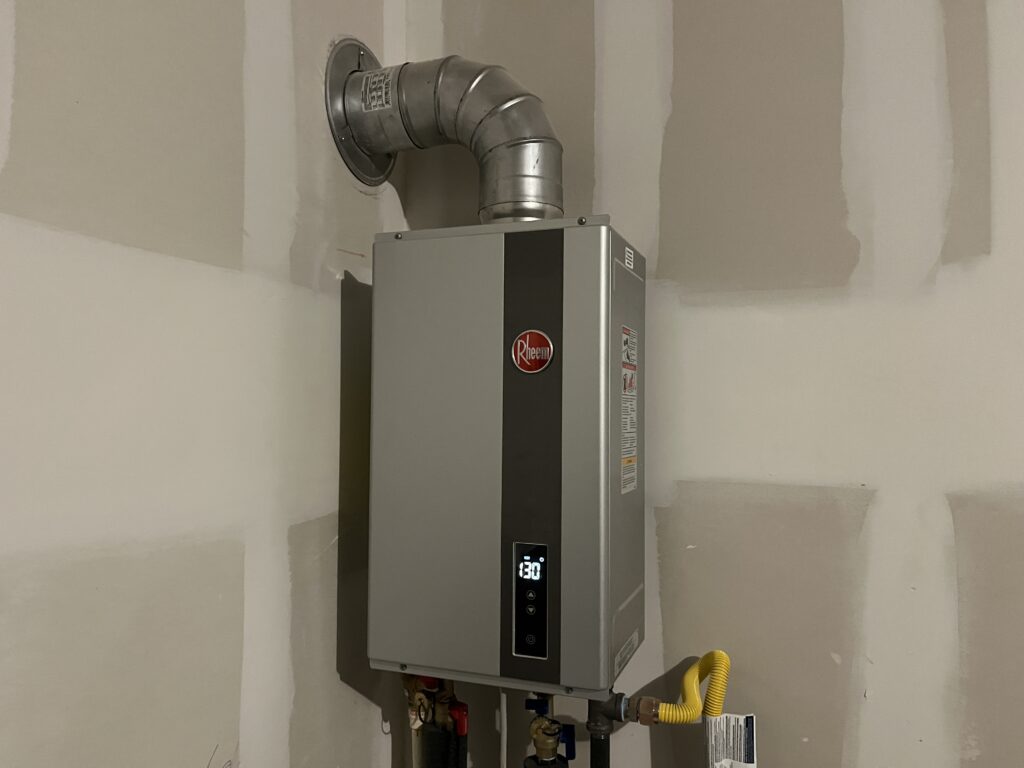
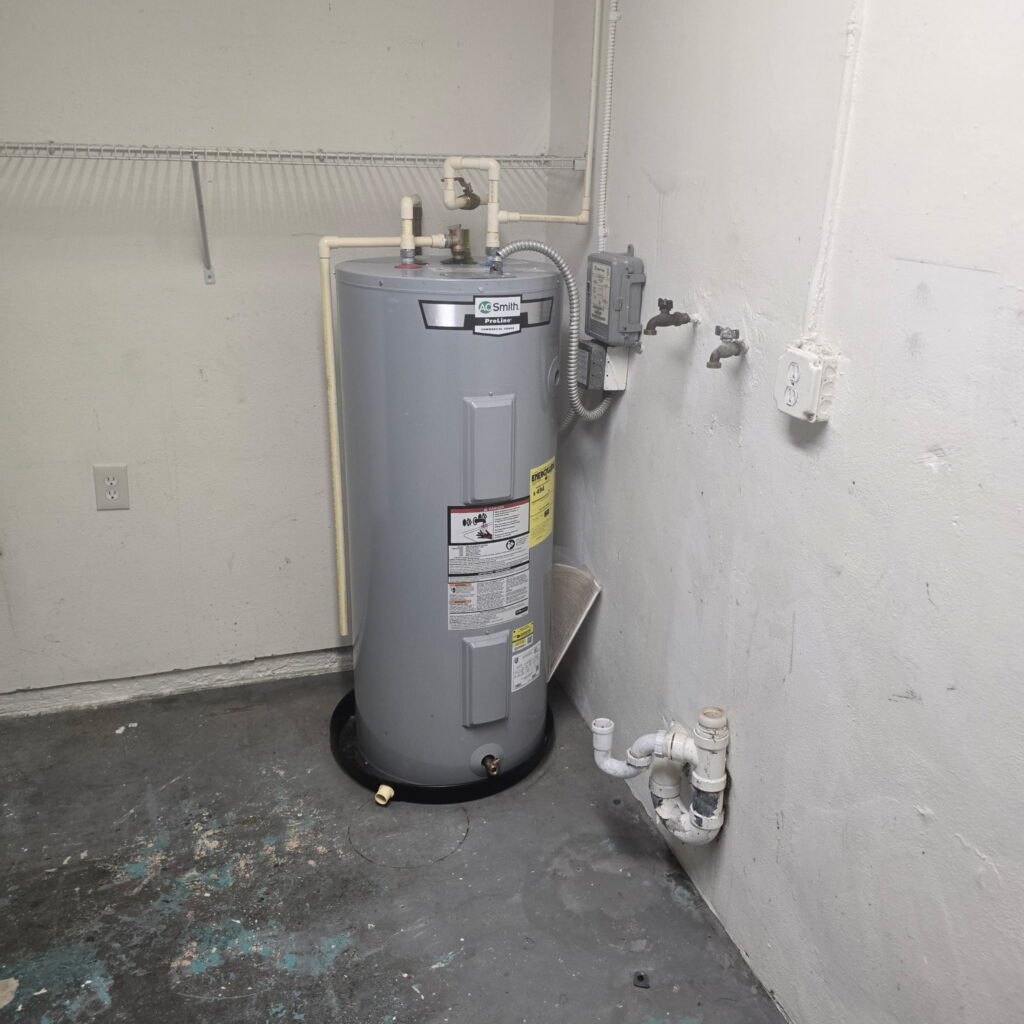
These two fundamentally different approaches lead to real differences in cost, performance, space requirements, and long-term reliability, all of which matter for homeowners in Phelan.
Energy Efficiency and Monthly Costs
One of the most frequently cited advantages of tankless water heaters is their energy efficiency. Traditional tank heaters suffer from what is called standby heat loss, the energy spent keeping 40 to 80 gallons of water hot all day and night regardless of whether anyone is showering, doing dishes, or running laundry. In a place like Phelan, where summer temperatures can climb past 100 degrees and winters bring freezing nights, a tank system sitting in an uninsulated garage or utility room is working against the environment around it almost constantly.
Tankless systems eliminate standby heat loss entirely. Because they only activate when hot water is actually needed, they use significantly less energy over the course of a year. Depending on how much hot water your household uses, the efficiency improvement can be meaningful on your monthly utility bill.
That said, the efficiency advantage narrows for larger households with high simultaneous demand. A tankless unit has a maximum flow rate measured in gallons per minute, and if two showers, a dishwasher, and a washing machine are all running at the same time, a single unit may struggle to keep up. In those cases, homeowners sometimes install two tankless units or pair a tankless system with a small buffer tank. For moderate-use households, though, the energy savings are real and add up over time.
Upfront Costs Versus Long-Term Value
It would be dishonest to talk about tankless water heaters without acknowledging that they cost more to purchase and install than traditional tank systems. A standard tank heater can be purchased and installed for a few hundred dollars in many situations, while a quality tankless unit along with the necessary installation work, which may include upgrading gas lines or electrical panels, often runs two to three times as much.
For homeowners who are working with a tight budget right now, that upfront difference is significant and shouldn’t be brushed aside. A traditional tank heater is a practical, reliable solution that can get a home back up and running quickly and affordably.
Where the math starts to shift in favor of tankless systems is over the lifespan of the unit. A conventional tank heater typically lasts 8 to 12 years in Phelan, and the hard water conditions here can push that toward the lower end of that range as mineral buildup takes its toll on the tank, anode rod, and heating elements. Tankless units, by contrast, are commonly rated for 20 years or more when properly maintained. When you factor in two or three tank replacements over the same period alongside the ongoing energy savings, many homeowners find that the tankless option pays for itself and then some.
Hard Water Considerations in Phelan
Phelan’s water supply is known for high mineral content, particularly calcium and magnesium. That hardness is hard on every water-using appliance in your home, and water heaters bear some of the worst of it because mineral scale builds up faster in hot water environments.
In a traditional tank water heater, scale accumulates on the heating elements and the bottom of the tank over time. This reduces efficiency, creates hot spots that can shorten the life of the tank, and eventually leads to sediment buildup that causes popping and rumbling sounds during operation. Annual flushing can help, but hard water accelerates the deterioration regardless.
Tankless water heaters are not immune to hard water either. Scale can develop inside the heat exchanger, and if left unchecked, it will reduce efficiency and potentially damage the unit. The difference is that tankless units are generally easier to descale and maintain, and a professional descaling service every year or two can keep the system running well for decades. Many Phelan homeowners also pair their water heater, whether tank or tankless, with a water softener to protect all of their appliances and extend service life significantly.
Hot Water Supply and Household Demand
One of the most practical questions to ask when choosing a water heater is how much hot water your household actually needs and when you need it. Traditional tank heaters excel at delivering a consistent supply of hot water up to the capacity of the tank. If your family tends to take showers back to back, run the dishwasher in the evening, and do laundry on the same day, a properly sized tank system handles that without any issues as long as the tank has recovered between heavy uses.
The limitation of a tank system shows up when demand exceeds capacity. If you have a large household and everyone showers in the morning within an hour of each other, you may already know the experience of running out of hot water before the last person gets their turn. A larger tank can help, but it also means more energy spent keeping that bigger volume of water hot around the clock.
A tankless system solves the running-out problem in theory, since it heats on demand continuously. But it introduces a different constraint, which is the flow rate. A tankless unit is rated to heat a certain number of gallons per minute, and pushing beyond that number means the outgoing water temperature drops. For most Phelan households with two to four people, a properly sized tankless unit handles typical daily demand without trouble. Larger families with high simultaneous use may need to size up or consider multiple units.
Space and Installation Factors
Traditional tank water heaters are large. A 50-gallon unit is typically about five feet tall and nearly two feet in diameter, and it needs clearance around it for ventilation and service access. In a small utility closet or a home where space is at a premium, that footprint is something to consider.
Tankless water heaters are dramatically smaller. A whole-house gas tankless unit is roughly the size of a suitcase and mounts directly on a wall. That recovered space can be genuinely useful in a tight utility room or garage, and because tankless units can be installed outdoors in the right conditions, they open up installation options that tank systems simply don’t have.
The installation process for tankless units is more involved, however. Gas-powered tankless heaters require dedicated, larger-diameter gas lines to supply the high BTU burners that heat water quickly. Electric tankless units may require significant electrical panel upgrades to handle the load. These requirements add to the installation cost and time, and they make professional installation by a licensed plumber essential. Attempting to cut corners on the installation of a tankless unit can create safety hazards and void the manufacturer’s warranty.
Reliability and Maintenance Over Time
Both types of water heaters are reliable when properly maintained, but they fail in different ways and at different intervals. Traditional tank heaters are straightforward to maintain and to diagnose when something goes wrong. The components are simple, repair parts are inexpensive and widely available, and most plumbers can service them quickly.
Tank water heaters do have one significant failure mode that tankless units don’t share, which is tank corrosion and rupture. Over time, even a well-maintained tank can develop rust and begin leaking. A tank failure can mean water damage to the surrounding area, and in Phelan where garages and utility rooms sometimes go unnoticed for days, a slow leak can become a significant problem before anyone notices.
Want to know more about what are signs of a healthy water heater? Click here to learn more.
Tankless units are more complex internally and can have higher repair costs when something goes wrong, particularly with electronic components or the heat exchanger. However, because there is no tank to corrode and rupture, the risk of catastrophic water damage is much lower. A failing tankless unit typically shows its symptoms early through reduced performance or error codes before it becomes a crisis.
Choosing between a tankless and a traditional water heater in Phelan, CA comes down to matching the right system to your household’s specific needs, budget, and long-term goals. A traditional tank heater remains a cost-effective, reliable option for homeowners who need a straightforward replacement without a large upfront investment, and it delivers dependable performance when properly sized and maintained. A tankless system offers compelling advantages in energy efficiency, space savings, and longevity, particularly for households that are thinking in terms of a ten or twenty year horizon and are prepared for the higher installation cost.
The hard water conditions in Phelan make maintenance a priority regardless of which system you choose. Regular flushing or descaling, along with a water softener if you don’t already have one, will extend the life of either system considerably. Whatever direction makes sense for your home, a qualified plumber who knows the local conditions can help you select the right unit, size it correctly for your household, and install it safely. At Rescue Plumbers, we work with homeowners throughout Phelan to make water heater decisions that serve them well for years to come. Reach out to our team whenever you are ready to talk through your options.