
How To Keep Outdoor Faucets From Freezing
Outdoor faucets take a harder beating than any other plumbing fixture on your property once nighttime temperatures start dipping toward the freezing mark. They sit on an exterior wall with nothing but a thin layer of siding or stucco between the valve body and the open air, and the short run of water supply line feeding them gets very little help from the heat inside your house. Homeowners across Phelan, Pinon Hills, and Wrightwood learn this the hard way every single year, and they usually learn it in April, when they hook up a garden hose for the first time and water pours out of a wall, a ceiling, or a crawlspace instead of the sprinkler head. Preventing that damage costs almost nothing in September and October, while repairing it in the spring routinely runs into the thousands once drywall, insulation, subfloor, and flooring get pulled into the job. The encouraging part is that outdoor faucet freeze protection ranks among the simplest maintenance projects a homeowner can handle alone. It takes a few dollars in materials, roughly an hour of your time, and a clear understanding of where your shutoff valves are located. This guide covers why outdoor faucets freeze in the first place, what physically breaks when they do, and the exact steps that stop the problem before it ever starts.
What Causes Outdoor Faucets To Freeze and Burst
The failure almost never happens where homeowners expect it to happen. People assume the faucet itself cracks, and sometimes it does, but the far more common and far more expensive outcome is a split in the copper or galvanized supply line hidden inside the wall cavity behind the faucet. Understanding the mechanics here matters, because it explains why simply covering the faucet with a towel or a plastic bag accomplishes nothing at all. Water behaves differently than most substances when it changes state, and that difference is what destroys plumbing systems every winter across the High Desert. Elevation works against you here as well, since Phelan sits around 4,000 feet and Wrightwood climbs past 5,900 feet, which means overnight lows drop well below freezing far more often than they do down the hill in the Inland Empire. A single hard freeze in late October catches more homeowners off guard than the entire month of January does, because nobody has winterized anything yet. Knowing the sequence of events gives you a much better sense of which prevention steps actually earn their keep.
Why Outdoor Faucets Freeze in High Desert Winters
The High Desert climate creates a specific and punishing set of conditions for exterior plumbing that coastal and valley homeowners rarely deal with. Daytime highs in December frequently reach the upper fifties or low sixties, which lulls people into thinking the freeze risk has passed, and then the temperature plunges thirty or forty degrees after sunset because the dry desert air holds almost no heat overnight. That daily swing means your outdoor faucet can thaw completely by early afternoon and refreeze solid by ten at night, repeating the stress cycle over and over for weeks on end. Wind compounds the problem considerably, since the constant flow across an exposed north or east facing wall strips away whatever small amount of warmth radiates out from the house. Homes in Oak Hills and Adelanto sit on open lots with very little natural windbreak, so the exterior walls stay cold long after the sun comes up. Snow at the higher elevations around Wrightwood adds moisture that seeps into the wall penetration around the faucet and freezes there as well. All of these factors stack on top of each other, and the result is that a faucet which survived five mild winters can fail badly during the sixth.
The physical location of the faucet on the structure matters enormously, and most homeowners have never given it a second thought. A hose bibb mounted on the sunny south wall of a house benefits from several hours of direct radiant warming every clear day, which is often enough to keep the valve body above freezing during a moderate cold snap. That same fixture installed on the shaded north wall receives no direct sun at all between November and February, so it stays at or below ambient temperature around the clock. Faucets on detached garages, barns, well houses, and shop buildings face the worst conditions of all, because those structures have no interior heat source pushing warmth into the wall cavity. Rural properties around Lucerne Valley and Oro Grande often have long runs of supply line crossing unheated crawlspaces or running through uninsulated skirting, and every foot of that run is a candidate for freezing. If the pipe feeding the faucet passes through an attic or a vented crawlspace, that section is functionally outdoors as far as temperature is concerned. Walking your property and identifying which faucets sit in the coldest, most exposed positions tells you exactly where to concentrate your effort.
Attached garden hoses cause more freeze damage than any other single factor, and this holds true regardless of how well built the faucet happens to be. A hose left connected keeps a column of water trapped inside the faucet body and the first several inches of supply line, since the water has nowhere to drain out. That trapped water freezes first because it sits in the coldest part of the system with no circulation and no pressure relief. Even a modern freeze proof sillcock, which is specifically engineered to drain itself and keep the shutoff seat back inside the warm envelope of the house, becomes completely useless the moment somebody screws a hose onto it. The hose blocks the drainage path the fixture depends on, and the valve then holds standing water right in the freeze zone exactly like a cheap fixture would. Quick connect adapters, brass splitters, timers, and pressure regulators left threaded onto the faucet create the identical problem. Disconnecting every hose and accessory in the fall is the highest value five minutes you will spend on your plumbing all year.
How a Frozen Outdoor Faucet Bursts a Water Supply Line
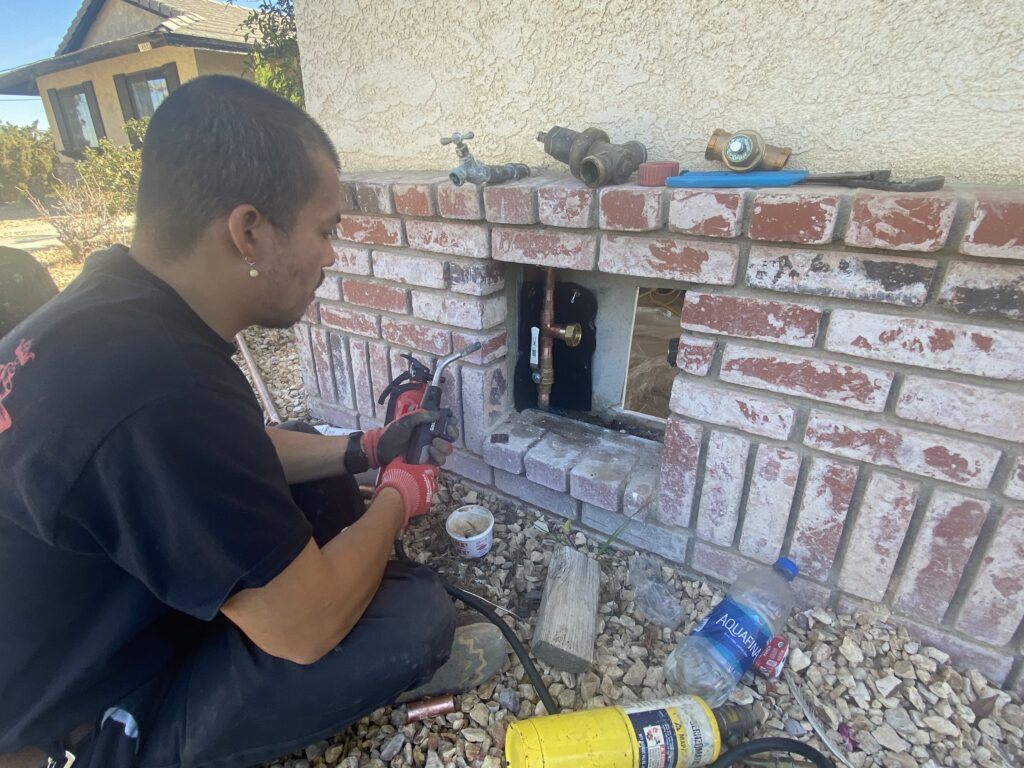
Water is unusual among common substances because it expands as it freezes rather than contracting, gaining roughly nine percent in volume as it turns to ice. That expansion generates tremendous force inside a sealed pipe, and copper, galvanized steel, CPVC, and even PEX fittings have hard limits on how much internal pressure they can absorb before something gives way. What surprises most people is that the pipe rarely splits at the exact point where the ice forms. The ice plug acts like a solid piston inside the pipe, and as it continues to grow it drives the remaining liquid water ahead of it toward the closed faucet. Pressure builds in that trapped section between the advancing ice and the closed valve, climbing to levels that can exceed two thousand pounds per square inch in a fully blocked line. The weakest point in that pressurized section fails first, which is frequently a soldered joint, a threaded connection, or a length of pipe several feet back inside the wall. This is precisely why a freeze at the faucet so often produces a leak in a completely different room.
The material your home is plumbed with changes the failure pattern in ways worth understanding. Rigid copper tends to split lengthwise along the pipe wall, producing a clean slit that can be an inch or two long and that will discharge an enormous volume of water once pressure returns to the line. Galvanized steel, common in older High Desert homes built before the 1980s, usually fails at the threaded joints where the pipe wall is already thinned by the threading process and weakened further by decades of interior corrosion. CPVC becomes noticeably brittle in cold weather and can shatter rather than split, sometimes breaking into multiple pieces. PEX tubing handles freezing far better than the alternatives because the material stretches and then relaxes, but the brass or poly crimp fittings joining PEX runs have no such flexibility and will separate or crack under the same pressure. No piping material available today is genuinely freeze proof, and any plumber who tells you otherwise is selling something.
Here is the detail that turns a small problem into a catastrophic one. When a supply line splits during a freeze, the ice plug itself seals the break, so nothing leaks and nothing looks wrong. The homeowner sleeps through the night with no indication that anything has gone sideways. Then the sun comes up, the temperature climbs, the ice melts, and full household water pressure hits an open wound inside the wall cavity. A one inch split in a half inch copper line can move several hundred gallons of water per hour, and if that break sits in an interior wall or above a ceiling, the damage spreads through insulation, framing, drywall, and flooring long before anyone notices a stain. Properties that sit vacant during winter months, including seasonal cabins around Wrightwood and rental homes between tenants, can flood continuously for days or weeks. If you suspect a line has already failed somewhere you cannot see, do not wait for the water to find you. Concerned about a hidden break inside a wall or under a slab? Click here for our leak detection service.
Signs Your Outdoor Faucet Froze Last Winter
Plenty of outdoor faucets sustain freeze damage that goes completely unnoticed for months, and catching those warning signs now prevents a much larger failure later. The most common indicator is a faucet that produces weak, sputtering flow or no flow at all when you open it, which points to a valve seat or stem damaged by ice expansion. Another telltale sign is a faucet that keeps dripping steadily after you close the handle all the way, since a cracked seat or a deformed washer no longer seals against the water pressure behind it. Some homeowners notice a hose bibb handle that turns much harder than it used to, or one that spins loosely without engaging anything. Water appearing at the base of the faucet where it meets the wall, rather than out of the spout, almost always means the fixture body itself has cracked. Any of these symptoms warrants replacing the faucet before the next freeze rather than after it.
Damage to the concealed supply line announces itself through less obvious clues, and reading them correctly can save you an enormous repair bill. Watch for a persistent damp spot, efflorescence, or discoloration on the exterior wall directly below or beside the faucet, which suggests water is escaping behind the siding. Inside the house, look for bubbling paint, soft drywall, warped baseboard, or a musty smell in the room that shares a wall with the outdoor faucet. A water meter that continues to register usage with every fixture in the house shut off is one of the most reliable indicators that a supply line is leaking somewhere. Unexplained increases in your water bill during winter months point in the same direction. In crawlspaces, check for damp soil, standing water, rusted duct work, or insulation that has fallen away from the floor joists. Homes on well systems may notice the pump cycling on at odd intervals with nothing running.
Testing your outdoor faucets properly before the cold season begins takes just a few minutes per fixture and gives you real information. Open each faucet fully and let it run for a solid minute while you watch the stream for consistency, since a strong steady flow indicates the valve and the line behind it are both intact. Close the handle firmly and watch for thirty seconds to confirm it stops cleanly with no drip and no seepage at the packing nut. Feel around the wall penetration with your hand to check for any moisture or unusual coldness that might indicate a gap in the sealing. Give the faucet body a firm wiggle to see if it moves independently of the wall, which suggests a loose mounting or a compromised connection behind it. If any faucet fails these basic checks, replace it now, while the weather is still mild and a plumber can work comfortably without fighting frozen ground or ice. Repairs made in September cost a fraction of what emergency repairs cost in January.
How To Keep Outdoor Faucets From Freezing Step by Step
Preventing outdoor faucet freeze damage comes down to three principles applied in the right order: remove the water, insulate what remains, and upgrade the hardware where it makes sense. Homeowners who skip straight to insulation without draining the line first often get a false sense of security, because foam and fabric only slow heat loss down; they do not create heat. A faucet full of standing water inside an insulated cover will still freeze given a long enough cold spell. The most reliable approach handles the fundamentals first and then adds protective layers on top. Timing matters as much as technique, and in this region the sensible window runs from mid September through mid October, well ahead of the first hard freeze. Waiting until the forecast shows twenty five degrees leaves no margin for finding a stuck shutoff valve or a missing part. Set aside one Saturday morning, work through every exterior faucet on the property, and the job is finished until spring.
Drain and Shut Off Outdoor Faucets Before the First Freeze
Start by locating the interior shutoff valve that controls each outdoor faucet, because this single component does more to prevent freeze damage than everything else combined. In most High Desert homes, that valve sits in the garage, a utility closet, a laundry room, or under the kitchen or bathroom sink nearest the exterior faucet. Homes with crawlspaces often have the valve mounted on the supply line just inside the foundation, directly behind the hose bibb. Older properties may have a gate valve with a round wheel handle, while newer construction typically uses a quarter turn ball valve with a lever. Tag each valve with a label so you never have to hunt for it again, and photograph the location for your records. If you cannot find a dedicated shutoff for a particular faucet, that fixture may be plumbed directly off a main line without one, which is worth having a plumber correct before winter.
With the shutoff valve identified, the drainage sequence is straightforward and takes about two minutes per faucet. Remove the garden hose completely, along with any splitter, timer, quick connect fitting, or nozzle threaded onto the spout. Close the interior shutoff valve fully, turning it clockwise for a gate valve or ninety degrees for a ball valve. Walk outside and open the exterior faucet all the way, letting the water in the line between the valve and the spout run out until it stops completely. Leave that outdoor faucet in the open position for the entire winter, which gives any residual moisture room to expand harmlessly instead of building pressure. Back inside, look for a small bleeder cap or drain port on the body of the shutoff valve itself, and if one exists, place a cup underneath and open it briefly to release the last of the trapped water in the line.
A few additional details separate a thorough job from a partial one. Irrigation systems and drip lines connected to outdoor faucets need the same treatment, and their backflow preventers are especially vulnerable because they contain internal chambers that hold water. Drain irrigation lines by opening the manual drain valves at the low points of each zone, or have the system blown out with compressed air kept below eighty pounds per square inch for rigid PVC and below fifty for flexible poly tubing. Pressure washers, evaporative cooler supply lines, and livestock waterers all follow the same shutdown logic. Do not overlook faucets on detached shops, well houses, or barns, since those see the coldest conditions and get checked the least. Any exterior faucet you genuinely need to use during winter, such as one supplying animal water, should be operated during the warmest part of the day and drained immediately afterward. Need a new shutoff valve installed or an aging supply line replaced before the cold hits? Click here for our water supply lines service.
Insulated Covers That Keep Outdoor Faucets From Freezing
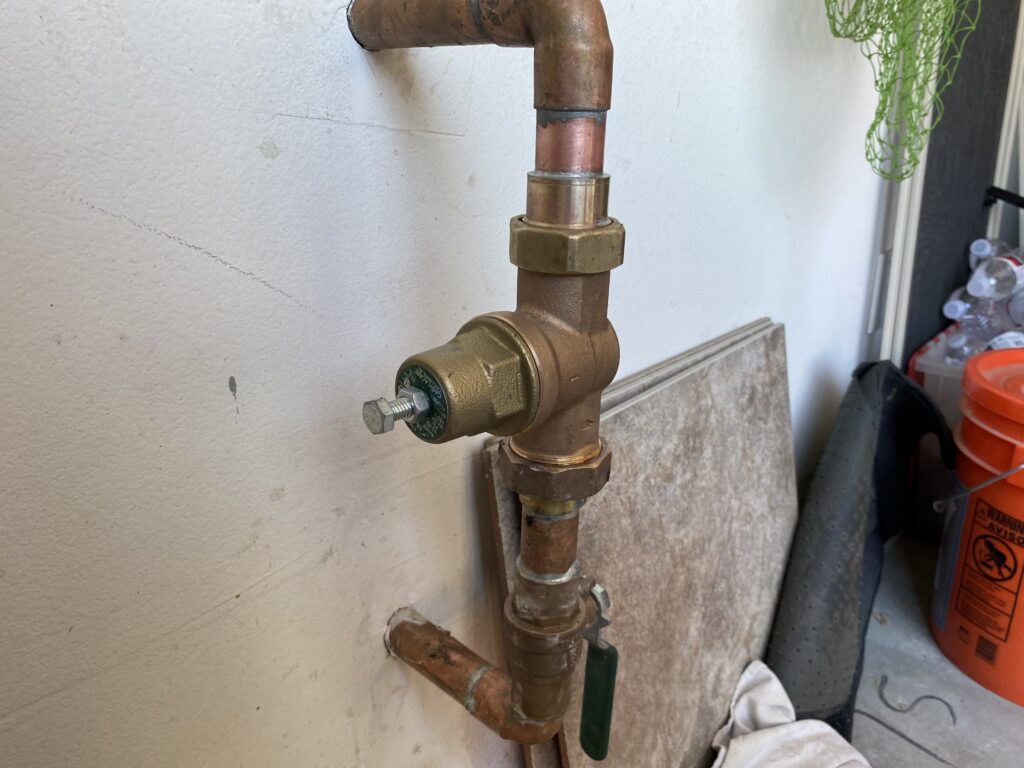
Insulated faucet covers provide a genuinely useful second layer of protection, and they cost less than ten dollars apiece at any hardware store in Victorville or Hesperia. The two common styles are a rigid foam dome that clamps over the fixture and a soft insulated pouch that cinches closed with a drawstring. Both work by trapping the small amount of heat that conducts outward through the wall and the pipe, holding the air immediately around the faucet several degrees warmer than the outside temperature. That margin of a few degrees is often exactly what separates an intact pipe from a burst one during a typical High Desert overnight low. Rigid covers hold up better against wind and hold their shape over multiple seasons, while soft pouches fit awkward configurations and oversized valves more easily. Buy one for every exterior faucet on the property and store them together in the garage during the warm months.
Installation quality determines how much protection you actually get, and a poorly fitted cover barely helps at all. The cover must seal tightly against the wall surface with no gap where cold air can circulate underneath, since airflow behind the insulation defeats the entire purpose. Most rigid domes come with a loop of cord and a small clamp that hooks over the faucet spout and tightens the dome flush against the siding. Check that seal by running your fingers around the entire perimeter after installation to confirm nothing is holding it off the wall. On stucco or stone veneer, an uneven surface may leave gaps, and a bead of removable weatherstripping foam around the rim solves that easily. Inspect the covers after every windstorm, because a dome that has been knocked loose provides zero protection and gives you a false sense of confidence.
Understand clearly what these covers can and cannot accomplish. They are supplemental protection layered on top of proper draining, not a replacement for it, and the packaging on most products says exactly that in fine print. A cover placed over a faucet still holding standing water, still connected to a hose, will slow the freeze but will not prevent it during a sustained cold spell of several days. Covers also do absolutely nothing for the supply line running back through the wall cavity, which is the section that usually splits. For faucets in unheated crawlspaces, well houses, or exposed under a manufactured home, add closed cell foam pipe insulation sleeves along the entire visible run of pipe, sealing the seams with the adhesive strip and taping the joints. Self regulating heat cable rated and listed for potable water pipe is the appropriate solution for pipe runs that simply cannot be drained, and it must be installed according to the manufacturer instructions without overlapping the cable on itself. Sealing air gaps around the pipe penetration with expanding foam or caulk delivers additional benefit at almost no cost.
Frost Free Sillcocks and Pipe Insulation for Outdoor Faucets
Upgrading an old compression hose bibb to a freeze proof sillcock is the single most effective permanent fix available for outdoor faucet freeze protection. A standard hose bibb closes at a valve seat located inside the fixture body, which sits entirely outside the wall in the coldest possible position. A freeze proof sillcock uses a long stem, typically between six and fourteen inches, that places the actual shutoff seat back inside the heated envelope of the house where the temperature stays well above freezing. When you close the handle, the water stops deep inside the warm wall, and everything in the exposed tube in front of that seat drains out through the spout by gravity. The fixture protects itself automatically every time you turn it off, with no seasonal ritual required. Quality models from established manufacturers run between forty and eighty dollars, which is trivial compared to a single water damage claim.
Correct installation determines the outcome, and this is where a great many freeze proof sillcocks fail to deliver on their promise. The fixture must be installed with a slight downward pitch toward the exterior, generally about a quarter inch of drop over its length, so gravity can actually pull the water out of the barrel. A sillcock installed dead level or pitched even slightly upward will retain water in the tube and freeze exactly like the fixture it replaced. The stem length must also be long enough to place the seat past the wall insulation and into conditioned space, which means measuring your wall thickness before buying rather than after. On homes with thick stucco or an added layer of exterior insulation, a standard eight inch model may fall short and leave the seat inside the cold cavity. The connection at the back of the sillcock needs to be properly soldered or crimped, and reaching that connection often requires access from a crawlspace, an attic, or an open interior wall.
Even the best freeze proof sillcock fails under a few specific conditions worth committing to memory. Leaving a hose attached blocks the drainage path and defeats the entire design, which bears repeating because it is the most common mistake homeowners make with these fixtures. The vacuum breaker assembly mounted at the top of the fixture contains a small internal check that can hold a residual amount of water and crack in extreme cold, and replacement vacuum breaker caps cost only a few dollars. Sediment and mineral scale, which are abundant in High Desert well water and municipal supply alike, can build up inside the barrel and obstruct drainage over the years. Homes with aging galvanized supply piping throughout will keep experiencing freeze failures at other points in the system regardless of how good the exterior fixtures are, since corroded galvanized pipe has a narrowed interior diameter that freezes faster and bursts sooner. Replacing failure prone piping is the real solution in those cases. Dealing with old galvanized pipe that keeps causing problems? Click here for our repiping service.
Why You Need a Professional Plumber for Outdoor Faucet Freeze Protection
Draining a hose bibb and clipping on a foam cover falls squarely into the range of tasks any homeowner can handle without help. Replacing a fixture, correcting a bad installation, or finding a leak inside a wall calls for licensed hands, proper tools, and a working knowledge of local code requirements. Rescue Plumbers Inc has spent fifteen years working on High Desert homes, and our technicians know exactly how these systems fail in Phelan, Hesperia, Apple Valley, and every community in between. We provide free, no obligation estimates so you know the cost before any work starts. Our plumbers work on a non commission basis, meaning nobody on our team has a financial reason to sell you something you do not need. That structure is the foundation of how we treat every customer who calls.
When To Call a Plumber About Outdoor Faucet Freeze Damage
Call a plumber right away if an outdoor faucet drips continuously after being shut off, since a failed valve seat means the fixture cannot drain properly and will freeze at the first opportunity. Water appearing at the base of the faucet where it enters the wall is another situation that needs immediate professional attention, because that pattern usually indicates a cracked fixture body or a compromised connection behind the siding. A faucet that produces no water at all when the interior shutoff is confirmed open points to a blockage or a break somewhere in the supply line. Handles that bind, spin freely, or refuse to close fully all signal internal damage that will only get worse with another freeze cycle. Any of these conditions is far cheaper to correct now than after a line lets go.
Certain warning signs indicate a problem that has already moved beyond the faucet itself and into your home. A water meter that keeps turning with every fixture closed, an unexplained jump in your water bill, or the sound of running water in a wall all point to an active leak somewhere in the system. Damp drywall, bubbling paint, or a musty odor in a room adjoining an exterior wall deserves prompt investigation rather than a wait and see approach. Homeowners on well systems should pay attention to a pump that cycles when nothing is running, which is a classic symptom of a hidden supply line break. Our technicians use electronic leak detection equipment to pinpoint these breaks without opening up walls unnecessarily. Finding the exact location first keeps the repair small and the restoration cost low.
Seasonal timing plays a significant role in what you end up paying. Scheduling a fall plumbing inspection in September or October gives us the opportunity to check every exterior faucet, verify each shutoff valve operates correctly, and replace any fixture that will not survive the winter. Emergency calls in January mean working in freezing conditions, often with limited access and a customer already dealing with water damage. Rental property owners, seasonal residents, and anyone leaving a home unoccupied through the cold months should have the plumbing professionally winterized rather than trusting it to chance. A vacant house with a burst line can flood for weeks before anybody walks through the door. One preventive visit removes that entire category of risk.
What Professional Outdoor Faucet Freeze Protection Includes
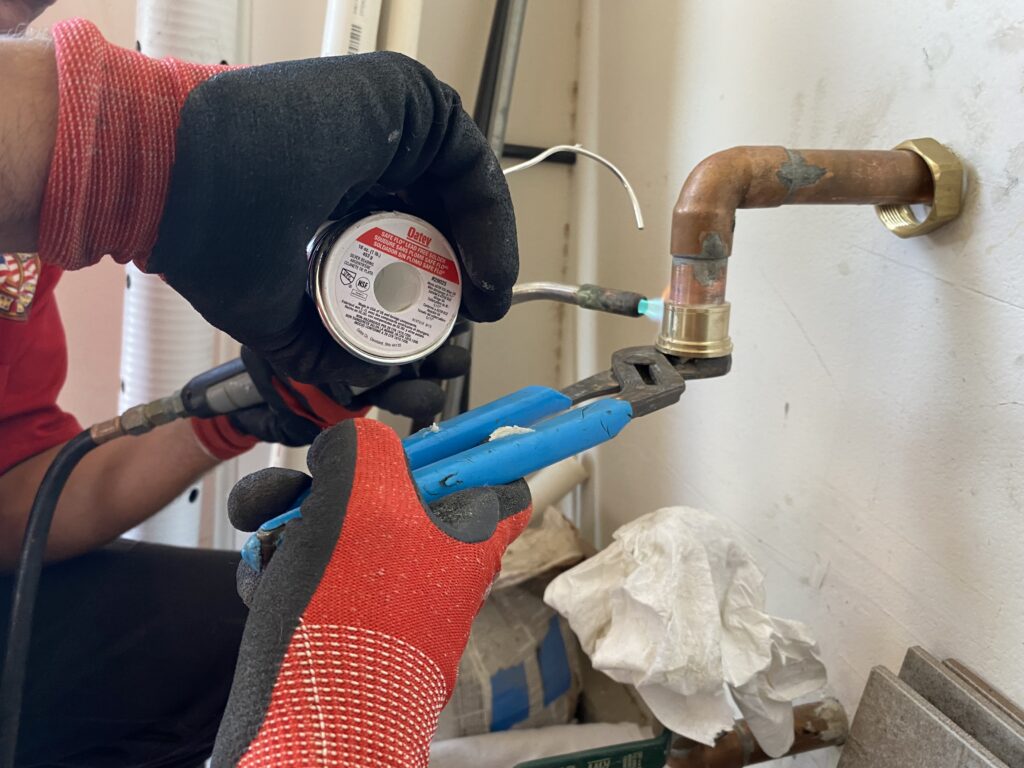
A professional freeze protection visit from Rescue Plumbers Inc begins with a walkthrough of every exterior water source on the property, including faucets on detached garages, shops, well houses, and outbuildings. We test each fixture under pressure, confirm it closes cleanly, and inspect the wall penetration for gaps, moisture, or movement. Every interior shutoff valve gets located, operated, and labeled so you can find it instantly on a cold night. Valves that are seized, corroded, or leaking at the packing get repaired or replaced during the same visit. You leave the appointment knowing precisely how your system is laid out.
Fixture replacement is the most common recommendation we make, and we install freeze proof sillcocks sized correctly for your specific wall thickness. Our technicians set the proper downward pitch for gravity drainage, confirm the shutoff seat lands inside conditioned space, and make a clean soldered or crimped connection at the supply line. We insulate exposed pipe runs through crawlspaces and unheated areas with closed cell sleeves, and we seal air gaps at wall penetrations that let cold air reach your plumbing. Where a pipe run genuinely cannot be drained, we install listed heat cable to the manufacturer specification. Every job gets tested under full pressure before we pack up.
We also handle the repairs that follow a freeze that already happened. Split copper, cracked fittings, and failed galvanized joints get cut out and replaced with new material rather than patched. When freeze damage keeps recurring at multiple points, we discuss repiping the affected sections or the whole home, and we explain the real costs and benefits without pressure. Our estimates are free and carry no obligation, so a conversation costs you nothing. Every technician who arrives at your door is licensed and insured, and we stand behind the work we perform.
Why Choose Rescue Plumbers Inc for Outdoor Faucet Freeze Protection
Rescue Plumbers Inc is a family owned and operated company based at 6083 Lindero Rd in Phelan, and we live in the same High Desert communities we serve. That local presence is not a marketing line; it means our technicians already understand how Wrightwood winters differ from Victorville winters and how well water in Pinon Hills affects fixtures differently than municipal supply in Apple Valley. Fifteen years of working on these homes has taught us which failures recur and which prevention steps genuinely pay off. We serve Adelanto, Apple Valley, Barstow, Helendale, Hesperia, Lucerne Valley, Mariana Ranchos, Oak Hills, Oro Grande, Pinon Hills, Spring Valley Lake, Victorville, and Wrightwood. When you call, you reach people who know your area.
Our non commission structure changes the entire nature of the service call. Technicians earn the same whether they replace one faucet or six, which means the recommendation you receive reflects what your plumbing actually needs. We give you free, no obligation estimates in plain language, with the reasoning explained so you can make your own decision. If a repair will hold for another season, we say so. If a fixture is going to fail, we say that too.
Real human connection matters to us as much as technical skill does, and you will notice it from the first phone call. We answer questions directly, show up when we say we will, and treat your home with respect while we work. Our plumbers are licensed, insured, and carry the professional credentials to back up the work. Call us at (760) 241-3100 or email fixit@rescueplumbersinc.com to schedule your outdoor faucet freeze protection before the first hard freeze arrives. Getting this handled in the fall is the cheapest plumbing decision you will make all year.