
How To Prevent Kitchen Sink Clogs During Holiday Cooking
Holiday cooking puts more strain on a kitchen sink than any other stretch of the year. Turkey drippings, pie scraps, potato peels, and pans full of bacon fat all travel toward the same narrow drain line, often within the same afternoon. Most kitchen drains in High Desert homes measure only an inch and a half across, so buildup does not need to be dramatic before water starts backing up into the basin. A clog almost never shows up on a quiet weekday morning; it waits for the day the oven is full and the house is crowded. The encouraging part is that nearly every holiday sink backup traces back to a short list of habits that any homeowner can change in an afternoon. This guide covers what actually causes kitchen sink clogs during holiday cooking, the prevention steps that hold up under real cooking volume, and the warning signs that mean you should call a plumber before your first guest pulls into the driveway. Rescue Plumbers Inc has spent 15 years clearing holiday drain backups in Phelan, Hesperia, Victorville, and the rest of the Victor Valley, and the pattern behind those calls rarely changes from one season to the next.
What Causes Kitchen Sink Clogs During Holiday Cooking
Understanding the cause of kitchen sink clogs during holiday cooking makes prevention far simpler, because the same three culprits show up in service call after service call. Grease leads the list by a wide margin, followed closely by food scraps that a garbage disposal was never designed to grind, and then by the condition of the drain line itself. These three factors compound each other rather than acting alone. A pipe with a light grease coating catches starchy food particles that would otherwise wash straight through, and an older pipe with a rough interior surface catches both. Volume is the final ingredient, since a household that normally washes dishes for three people may suddenly be washing for twelve. When you stack all of that onto a drain line that has quietly narrowed over several years, the backup that follows feels sudden even though it built up slowly.
Grease and Cooking Oil Cause Most Kitchen Sink Clogs During Holiday Cooking
Grease behaves very differently at the sink than it does in the pan, and that difference is the root of the problem. Hot bacon fat, turkey drippings, and melted butter all pour like water, which convinces people they will keep moving all the way to the sewer. In reality they cool within a few feet of the drain opening and return to a semisolid state that clings to the inside wall of the pipe. Each pour adds another thin layer to the one before it, and the passage narrows a little more every time. Hot tap water does not solve this; it simply carries the grease a bit farther down the line before the same cooling happens in a spot you cannot reach. In areas with hard water like Phelan and Pinon Hills, dissolved calcium and magnesium react with the fatty acids in that grease and form a firm, soapy deposit that bonds to the pipe wall. That deposit is considerably tougher than the soft sludge most homeowners picture when they imagine a clogged drain.
Many households pour far more grease than they realize, because the obvious sources are only part of the total. Gravy that did not get eaten, the film left in a roasting pan, cream sauce residue, salad dressing, marinades, melted cheese, and the oily water from a can of tuna all count toward the same load. Dairy contributes as well, since butter, heavy cream, and full fat milk solidify at room temperature just like animal fat does. Rinsing plates before loading the dishwasher pushes another round of grease into the line, and the dishwasher itself typically discharges through the garbage disposal into that same kitchen branch. A single holiday meal can therefore send several cups of fats and oils into a pipe that was engineered to carry soapy water and small food particles. Nothing about any individual step feels reckless, which is exactly why the buildup goes unnoticed for years. The pipe keeps a record even when the homeowner does not.
The symptoms of a grease clog follow a predictable order, and recognizing them early saves a great deal of trouble. Drainage slows first, so the sink takes a few extra seconds to empty after you pull the stopper. Next comes a gurgling sound as air struggles past the restriction, followed by a sour smell rising from the drain as trapped food decays in the sticky residue. Plunging usually produces disappointing results, because the obstruction is not a single object sitting in the P trap; it is a coating spread across ten or twenty feet of horizontal pipe, frequently concentrated where the kitchen branch ties into the main line. Store bought drain chemicals struggle for the same reason, since they burn a narrow channel through the middle and leave the surrounding layer intact. Real removal takes mechanical scouring or high pressure water that strips the pipe wall back to its original diameter. That distinction explains why a properly cleaned line stays open for years while a chemically treated line often clogs again within weeks.
Food Scraps That Cause Kitchen Sink Clogs During Holiday Cooking
Starchy foods create some of the most stubborn kitchen sink clogs during holiday cooking, and holiday menus are built almost entirely around them. Potato peels, rice, pasta, stuffing, oatmeal, and flour based batters all absorb water and swell after they leave the sink. Once they settle in a horizontal section of pipe, they compress into a dense paste that behaves more like wet cement than like loose debris. Potato peels are especially problematic because their starch content is high and their shape lets them stack flat against each other. Running the disposal longer does not help, since grinding starch simply produces a finer material that packs more tightly. A plumber cabling a kitchen line after a large family dinner will often pull back a solid plug of gray starch rather than the tangle of scraps most people expect. The safest approach is to keep starchy waste out of the sink entirely and send it to the trash or the compost bin.
Fibrous foods create a different failure, and they defeat disposals that handle everyday scraps without complaint. Celery stalks, onion skins, corn husks, artichoke leaves, asparagus ends, and poultry skin all contain long strands that resist grinding. Instead of breaking apart, those strands wrap around the impellers and the flywheel, which strains the motor and lets partially ground material slip into the drain in ropey clumps. Those clumps then snag on any grease already coating the pipe and form the anchor point for a full blockage. Homeowners often notice the disposal sounding labored or humming without spinning, both of which point to a jam rather than a failed motor. Cooking for a crowd multiplies the amount of trimming and peeling happening at the sink, which is why these jams cluster around holidays. Scraping vegetable waste into a bowl on the counter eliminates the risk almost completely.
Coffee grounds, eggshells, bones, and hard pits round out the list of frequent offenders. Coffee grounds do not dissolve; they behave like fine sand and settle in the low points of a drain line, gradually building a gritty bed that catches everything passing overhead. Eggshells break into sharp fragments with a thin membrane that clings to pipe walls, and shell grit mixes with grease to form an abrasive sludge. Bones and fruit pits are simply harder than the disposal is designed to handle, and they can chip the grinding components or lodge in the chamber. Produce stickers deserve a mention as well, since the adhesive helps them attach to pipe walls where they collect other debris. None of these items pose a problem in isolation, but a holiday kitchen sends all of them down the same drain in a single day. That combined load is what turns a functional drain into a service call.
Older Drain Lines and Kitchen Sink Clogs During Holiday Cooking
The age and material of your drain piping determine how much abuse the line can absorb before it fails. Many older homes across the Victor Valley still carry sections of galvanized steel or cast iron beneath the kitchen. Galvanized steel corrodes from the inside out, and the zinc coating wears away to leave a rough, scaled surface that grabs grease and food particles the way sandpaper grabs dust. Cast iron rusts in a similar pattern and develops tuberculation, which is a bumpy internal buildup that steadily shrinks the usable diameter. Modern ABS and PVC drain lines have smooth walls that let debris slide through with far less resistance. A kitchen line that clogs every year despite careful habits is usually telling you the pipe itself has reached the end of its service life. In those cases repiping the affected run solves the problem permanently instead of buying another twelve months.
Installation quality matters just as much as pipe material. Drain lines need consistent slope, generally a quarter inch of fall per foot of run, so that solids move along with the water rather than settling out. A line with too little slope lets water outrun the debris, and a line with too much slope does the same thing for a different reason. Extra fittings, unnecessary turns, and improvised repairs each add friction points where material begins to collect. Venting problems create their own trouble, because a drain without proper air supply pulls a vacuum that can siphon the P trap dry and produce slow, gulping drainage. Remodels and additions are a common source of these defects, especially when the work was done without permits or by someone unfamiliar with drainage code. A plumber can often identify a slope or venting issue within minutes of watching how the sink drains.
When the slowdown extends beyond the kitchen, the problem usually sits farther downstream in the main sewer line. Tree roots, pipe bellies, offset joints, and years of accumulated grease all restrict flow at that level, and a heavy cooking day is often the load that finally exposes the weakness. Warning signs include a toilet that bubbles when the kitchen sink drains, water rising in a shower during a wash cycle, or several fixtures slowing down at the same time. Guessing at the cause wastes money, since cabling a kitchen branch does nothing for a root intrusion forty feet away. A camera inspection shows the actual condition of the pipe and pinpoints the trouble spot before anyone starts cutting or digging. Want to know what is really happening inside your main line? Click here for our sewer line inspection service.
How To Prevent Kitchen Sink Clogs Before and During Holiday Cooking
Preventing kitchen sink clogs during holiday cooking comes down to controlling what enters the drain and keeping the line clear between big meals. None of these steps require special tools or plumbing experience, and most of them take only a few seconds once they become routine. The goal is to intercept grease and solids at the counter instead of asking the pipe to handle them. A second goal is to keep the interior of the drain line as smooth as possible so that anything that does slip through keeps moving. Households that adopt these habits typically go years between drain problems, even with heavy cooking schedules. Households that skip them tend to call for service every holiday season on roughly the same schedule. The difference is preparation rather than luck.
Grease Disposal Habits That Prevent Kitchen Sink Clogs During Holiday Cooking
The single most effective habit is collecting grease in a container rather than pouring it down the drain. Keep an empty coffee can, a glass jar, or a heavy duty disposable cup near the stove during heavy cooking days. Pour hot fat into it, let the container cool on the counter or in the refrigerator, then throw the solidified block into the trash once it hardens. Larger volumes such as fryer oil should cool completely and go into a sealed container before disposal, and many auto parts stores and recycling centers in San Bernardino County accept used cooking oil. Never pour hot grease into a plastic bag or a thin plastic tub, since the heat can melt through and create a mess. This one change eliminates the majority of the material that causes serious kitchen clogs. It costs nothing and adds maybe thirty seconds to your cleanup routine.
Wiping before rinsing handles the residue that a jar cannot catch. Use a paper towel or an old rag to swipe out roasting pans, skillets, and serving dishes before they reach the sink, and scrape plates into the trash rather than the disposal. A basket strainer in the drain opening catches whatever slips past, and emptying it into the trash after each round of dishes keeps it working. Setting up a small waste bowl on the counter during prep gives everyone an obvious place to put peels and trimmings, which matters when several people are helping in the kitchen. Guests will use the sink out of habit unless a better option sits right in front of them. These small barriers stop far more material than most homeowners expect. Combined with grease collection, they handle nearly everything that would otherwise reach your pipes.
It is equally important to skip the methods that do not work. Dish soap does not neutralize grease inside a drain line; it emulsifies it briefly, then the grease separates and redeposits farther down the pipe where the water has cooled. Chasing grease with hot water produces the same delayed result and can push the problem into a section that is harder to access. Caustic drain chemicals deserve a firm no, since they generate heat that can warp plastic pipe, accelerate corrosion in older metal pipe, and sit in the trap as a hazard for anyone who opens it later. They also tend to bore a narrow opening through a grease layer without removing it, so the clog returns quickly and often worse. Boiling water poured repeatedly into PVC drain lines is another habit worth dropping, because sustained heat above roughly 140 degrees can soften plastic joints over time. Very hot tap water is a better routine choice and carries none of those risks.

Garbage Disposal Rules That Prevent Kitchen Sink Clogs During Holiday Cooking
A garbage disposal is a grinder for incidental scraps, not a substitute for a trash can, and treating it correctly prevents a large share of holiday clogs. Always run cold water before, during, and after operating the unit, and keep the water going for fifteen to twenty seconds after the grinding sound clears. Cold water keeps any fats present in a solid state so the impellers can break them up and flush them through rather than letting them melt and coat the pipe. Feed scraps in small batches instead of packing the chamber full and switching it on, since a loaded chamber overworks the motor and produces coarse material. Cut larger items into smaller pieces before they go in. Give the unit a moment between batches so the water has a chance to carry each round clear of the drain line. These few rules dramatically reduce both jams and downstream blockages.
Knowing what to keep out matters just as much as knowing how to run it. Keep out grease and oil, potato peels, rice, pasta, stuffing, coffee grounds, eggshells, bones, fruit pits, corn husks, celery, onion skins, artichoke leaves, and any fibrous vegetable trimmings. Expandable foods and stringy foods are the two categories that cause the most damage, and holiday menus feature both heavily. Flour based batters and doughs belong in the trash as well, since they form a paste that hardens inside the drain. A disposal handles small bits rinsed off a plate perfectly well; it does not handle the waste stream from prepping a full holiday dinner. Set a bowl on the counter for trimmings and the unit will serve you for many years without complaint.
Basic maintenance keeps the unit sharp and the chamber clean. Grinding a tray of ice cubes occasionally knocks residue off the impellers and the chamber walls, and a few citrus peels afterward cut the odor without harming anything. A humming sound with no rotation means the unit is jammed rather than dead; turn the switch off, use the hex wrench that came with the disposal in the socket on the underside, and work the flywheel free. Never put your hand into the chamber, even with the power off at the switch. If the unit is silent, look for the small red reset button on the bottom of the housing and press it once before assuming the motor has failed. Leaks at the sink flange or the discharge tube deserve prompt attention, since they usually mean a worn seal or a corroded housing. Disposal jamming, leaking, or humming right before the holidays? Click here for our garbage disposal repair service.
Weekly Drain Care and Hot Water Flushes That Prevent Kitchen Sink Clogs
A weekly flush keeps light residue from becoming heavy buildup. Fill the sink basin about halfway with the hottest water your tap produces, add a squirt of dish soap, then pull the stopper and let the full volume rush down at once. That surge of water moves with more force than a running faucet ever will, and it scours the pipe wall on the way through. Doing this once a week during heavy cooking season costs a few minutes and makes a measurable difference in how the drain performs. The baking soda and vinegar trick that circulates online produces an impressive fizz but very little cleaning power, since the reaction spends itself in the trap and never reaches the section where buildup actually lives. Use it if you like the smell, but do not count on it to keep a line open. The hot water flush is the version that works.
Enzyme based drain maintainers are worth adding to the routine for households that cook often. These products use bacteria and enzymes to digest organic material such as grease, soap film, and food residue, and they are safe for every common pipe material as well as for septic systems. Apply them at night when nobody will run water for several hours, since the treatment needs contact time to do its job. They work gradually rather than instantly, so they are a maintenance product instead of an emergency fix. Monthly application through the fall and winter helps keep a clean line clean. They will not open a drain that is already blocked, and reaching for one during a backup only delays the real repair. Think of them the way you think of a filter change rather than a rescue.
The physical parts of the sink need attention too. Clean the basket strainer regularly so debris does not sit in standing water and turn sour, and pull the dishwasher air gap cap on the counter to check for buildup that would slow the discharge. If your kitchen sink has been slowing down over the past several months, deal with it before the cooking season rather than during it, since a marginal drain fails under holiday volume every time. Many Victor Valley homeowners schedule a professional drain cleaning in the fall for exactly that reason. A clean line handles a big meal without drama, and the cost of scheduled maintenance sits well below the cost of an emergency call on a holiday weekend. Planning ahead is the cheapest plumbing decision available to you.
Why You Need a Plumber Before Holiday Cooking Season Starts
Prevention handles most kitchen sink clogs during holiday cooking, but some conditions require professional equipment and a trained eye. Years of accumulated grease, a damaged pipe, a slope defect, or a compromised main sewer line will not respond to anything you can do from the sink. Calling early gives you the whole schedule to work with instead of a narrow window during a holiday rush. It also lets a plumber address the real cause rather than clearing just enough to get water moving again. Rescue Plumbers Inc handles kitchen drain issues throughout Phelan, Hesperia, Adelanto, Apple Valley, Oak Hills, Victorville, and the surrounding communities, and we would rather help you prepare than help you recover.
Warning Signs You Need a Plumber for Kitchen Sink Clogs
Slow drainage is the earliest and most reliable warning that a kitchen sink clog is forming. A healthy kitchen drain empties a full basin quickly and steadily with no hesitation and no swirling pause at the end. When that same basin takes noticeably longer than it did a few months ago, the pipe has narrowed even though water is still passing. Waiting for a full stoppage only means the eventual repair happens under worse conditions. Address the slowdown while the line is still open and the work stays simple and affordable.
Sounds and smells provide the next round of evidence. Gurgling from the drain means air is being pulled past a restriction or through a compromised vent, and neither situation improves on its own. A persistent sour or sewer type odor points to decaying material trapped in a grease layer or to a P trap that is not holding its water seal. Water backing up into the second basin of a double sink indicates the blockage sits past the point where the two sides join. Any of these signs on their own justifies a service call, and two or more together make it urgent.
Some symptoms point past the kitchen and into the main sewer line. A toilet that bubbles when the sink drains, water appearing in a tub during a laundry cycle, or several fixtures slowing at once all suggest a restriction in the main rather than the branch. Recurring clogs in the same location after professional clearing usually mean a structural defect such as a belly, an offset joint, or root intrusion. Those situations call for a camera inspection so the repair targets the actual damage. Guessing at a main line problem is expensive, and the guess is wrong often enough to make inspection the smarter first step.
What Professional Drain Cleaning for Kitchen Sink Clogs Includes
A proper service call starts with diagnosis rather than equipment. We look at how the fixture drains, check the P trap and the disposal, and determine where the restriction sits before choosing a method. That step matters because the fix for a jammed disposal has nothing in common with the fix for twenty feet of hardened grease. Skipping diagnosis is how a drain gets cleared on Tuesday and clogs again on Friday. Understanding the cause is what makes the repair last.
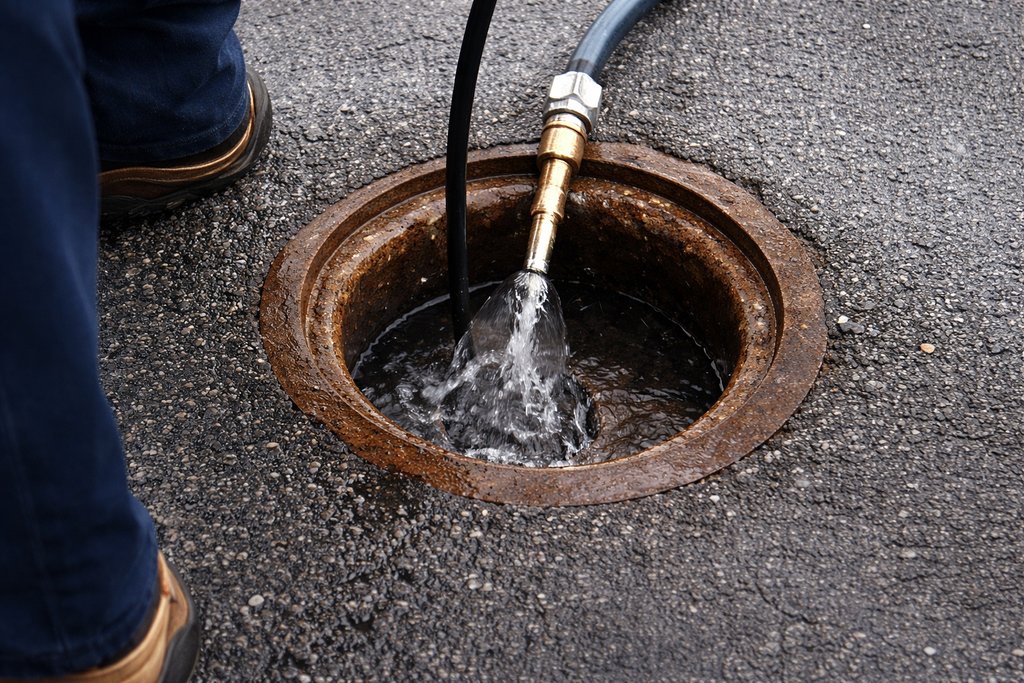
Cabling, often called snaking, uses a rotating steel cable with a cutting head to break through an obstruction and restore flow. It works well for solid blockages and for lines that need quick relief, though it primarily opens a path rather than cleaning the full pipe wall. Hydro jetting takes a different approach, sending water through a specialized nozzle at pressures commonly ranging from 1500 to 4000 psi to scour the interior surface back to bare pipe. That method is the right answer for grease, soap buildup, and mineral scale, which are exactly the deposits a kitchen line accumulates. A camera inspection before or after the work confirms the pipe condition and verifies the result. Ready for a deep clean before the cooking season starts? Click here for our hydro jetting service.
Good service does not end when the water starts moving. We tell you what came out of the line, what condition the pipe is in, and what caused the problem so you can avoid a repeat. If the pipe material or the installation is the underlying issue, we explain your repair options clearly and let you decide on your own timeline. Every estimate we provide is free and carries no obligation, and our technicians earn no commission on what they recommend. That structure removes any incentive to sell you work you do not need.
Why Choose Rescue Plumbers Inc for Kitchen Sink Clogs
Rescue Plumbers Inc is a family owned and operated company with 15 years of experience serving the High Desert. We are licensed and insured, and our technicians hold the professional credentials the work requires. Our team is not commission based, which means the person at your sink is focused on solving the problem rather than hitting a sales target. You receive a free, no obligation estimate before any work begins, so the price is settled up front. That approach has built our reputation one household at a time.
Truly local service means we understand the plumbing conditions specific to this region. We know how hard water in Phelan and Pinon Hills accelerates buildup inside kitchen drain lines, and we know the piping typically found in homes across Victorville, Hesperia, Apple Valley, and Oak Hills. That familiarity shortens diagnosis and improves the quality of the recommendation you receive. When you call, you speak with a real person who knows the area rather than a call center in another state. Real human connection is a standard we hold ourselves to on every job.
Do not let a slow kitchen drain turn into an emergency in the middle of a holiday meal. Call Rescue Plumbers Inc at (760) 241-3100, email us at fixit@rescueplumbersinc.com, or visit our office at 6083 Lindero Rd in Phelan, CA 92371. We will inspect your kitchen drain, clear what needs clearing, and give you honest guidance on keeping it open through the entire cooking season. Scheduling now costs less and stresses you less than scheduling during a backup. Your sink should be the last thing on your mind when the guests arrive.