
What Causes Foul Odors Coming From Your Drains
A foul odor coming from a drain is your plumbing system telling you something is wrong. Most homeowners notice it first in a bathroom that nobody uses, or in the kitchen sink after a hot afternoon. The smell may be sour and musty, or it may hit you with the sharp rotten egg punch of sewer gas. Summer makes the problem far worse across the High Desert, because triple digit heat and single digit humidity dry out plumbing traps fast, and warm pipes speed up the bacteria that create the smell in the first place. Some causes are simple enough to solve in five minutes with a pitcher of water. Others point to a blocked vent, a cracked sewer line, or a septic system that has stopped doing its job. The trick is knowing which is which before a nuisance smell turns into a sewage backup on your floor. This guide walks through every common source of drain odor in a home, explains why summer in Phelan, Hesperia, and Victorville brings these calls in waves, and shows you what a professional does to track the source down. Read it once and you will be able to narrow the problem yourself before you ever pick up the phone.
The Most Common Causes of Foul Odors Coming From Your Drains
Most drain odors start inside the drain itself, not in the sewer. Hair, soap scum, cooking grease, food particles, toothpaste, and skin cells coat the inside walls of your pipes over time and build a slick layer called biofilm. Bacteria live in that layer, feed on the organic material, and release sulfur gases as a waste product; that gas is what you smell every time water runs past it. Heat accelerates the whole process, which is why odor complaints spike between June and September. The second major cause is a plumbing trap that has lost its water seal, which lets sewer gas travel backward into your living space. Between those two problems, you can explain the large majority of household drain smells. The sections below break down each source and how to confirm it.
Dry P Traps Cause Foul Drain Odors During High Desert Summers
Every fixture in your home connects to a curved section of pipe called a P trap, and that curve holds a small pool of standing water at all times. Under California plumbing code, that water seal is between 2 and 4 inches deep, and it exists for exactly one reason: to block sewer gas from rising out of the drain and into your room. Water flows through it every time you use the fixture, refreshing the seal automatically. The seal only fails when the fixture sits unused long enough for the water to evaporate. In a humid climate that can take months. In Phelan, Pinon Hills, and Oak Hills, where summer humidity often drops into the teens and attic and wall temperatures climb well past 100 degrees, a trap can go dry in two or three weeks. That is why the guest bathroom nobody has touched since spring suddenly smells like a sewer in July.
Certain fixtures dry out far more often than others, and knowing the list saves you a lot of searching. Guest bathroom sinks, showers, and tubs top the list, especially in homes where family visits happen only a few times a year. Floor drains in garages, laundry rooms, and utility closets are close behind, because water almost never enters them by design. Basement and shop drains, rarely used wet bars, laundry standpipes behind a washer that has been sitting idle, and secondary kitchen prep sinks all belong in the same category. Vacation properties and rentals in Wrightwood and Lucerne Valley see this constantly during long vacancies. If your home smells fine everywhere except one room, walk into that room and start with the drains nobody uses.
The fix is simple, and you should try it before assuming the worst. Pour two or three quarts of water slowly down every suspect drain, including floor drains, and give it fifteen minutes. In most cases the smell fades within an hour as the seal reforms and pushes the gas back where it belongs. For drains that will stay unused, add roughly a quarter cup of mineral oil or cooking oil on top of the water; oil floats on the seal and slows evaporation dramatically, which can extend protection for months. Set a reminder to refill those drains at the start of every summer. If you refill a trap and the odor comes right back within a day or two, the trap is not the problem, and something is actively siphoning the water out or letting gas in another way. That points toward a vent issue or a damaged line, both covered further down this page.
Biofilm and Grease Buildup Cause Foul Odors Coming From Your Drains
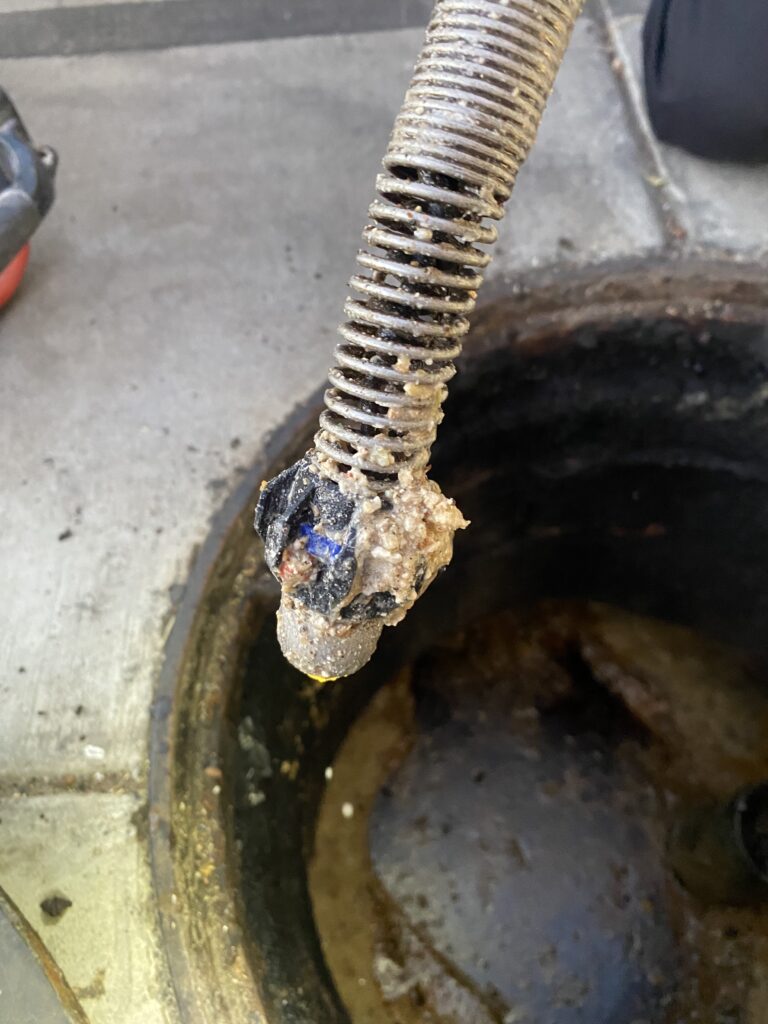
When a drain smells but the trap is full, the odor is almost always coming from buildup clinging to the pipe walls just past the fixture. Bathroom sinks collect a paste of soap, shaving cream, toothpaste, and hair that grips the tailpiece and the first few feet of horizontal pipe. Shower and tub drains collect hair and body oil in the same way, often wrapped around the crossbars of the strainer where you cannot see it. Kitchen lines collect grease, which cools on contact with the pipe wall and hardens into a layer that traps every food particle passing by afterward. None of this fully blocks the drain at first, so water still moves and homeowners assume everything is fine. The bacteria feeding on that layer produce hydrogen sulfide and other sulfur compounds, and those gases release every time warm water or air moves through the pipe. A slow drain paired with a sour smell is buildup nearly every time.
Summer heat changes the math on this problem in a real way. Bacterial growth roughly doubles with each significant rise in temperature, and drain lines running through hot walls, slabs, and crawl spaces stay warm around the clock during a Victorville July. Grease that stayed semi solid in winter softens and spreads across a wider section of pipe. Households also change their habits in summer; more cold drinks, more produce, more barbecue runoff, more sunscreen and body wash going down the shower. Homes on the High Desert’s hard water add another layer, since mineral scale gives the biofilm a rough surface to grab. Put those factors together and a pipe that behaved for two years can start smelling in a single hot month. The odor is the early warning; the clog usually arrives a few months later.
You can clear light buildup yourself with a few safe steps. Start by removing and scrubbing the pop up stopper or strainer, since a shocking amount of the odor often lives right there. Follow with a half cup of baking soda, a cup of white vinegar, a fifteen minute wait, and then a full kettle of very hot water flushed down the line. Enzyme drain treatments work well for maintenance because they digest organic material rather than burning it, though they need repeat applications over several weeks. Skip the caustic chemical drain openers; they generate heat, can soften ABS and older cast iron, rarely remove the full biofilm layer, and create a hazard for the next person who opens that pipe. If the smell survives all of that, the buildup extends deeper into the branch line than any home method reaches. Dealing with a drain that smells no matter what you pour into it? Click here for our hydro jetting service to scour the pipe walls clean.
Garbage Disposal Buildup Causes Foul Kitchen Drain Odors
The kitchen sink deserves its own section, because the garbage disposal is the single most common odor source in an American home. Food waste does not simply vanish when you flip the switch; it gets shredded and flushed, and a meaningful percentage of it sticks. The worst offender is the rubber splash guard at the top of the disposal, which traps a film of food on its underside where nobody ever looks or cleans. Debris also collects on the grind ring, under the impellers, and in the small gap between the disposal body and the sink flange. In a warm kitchen that material ferments within a day or two. Starchy foods, dairy, eggshell membrane, and fibrous vegetable scraps rot the fastest. If the smell comes from the disposal side of a double sink and gets stronger when you run the unit, you have found your source.
Cleaning a disposal properly takes about ten minutes and solves the problem more often than people expect. Cut the power at the breaker or wall switch first, then lift the rubber splash guard and scrub both sides with a stiff brush, dish soap, and hot water; you can also pull most splash guards out entirely for a proper wash. Restore power, then run a tray of ice cubes with a cup of rock salt through the unit to knock debris off the grind ring. Follow with a halved lemon or lime, peel included, while cold water runs. Finish by filling the sink basin a few inches with cold water and pulling the stopper so a large slug of water flushes the entire drain line at once, which does far more than a thin trickle from the faucet. Repeat monthly through summer.
Prevention matters more than cleaning. Always run cold water before, during, and for a solid thirty seconds after grinding, since cold keeps fats firm enough to pass through instead of coating the pipe. Keep grease, oil, coffee grounds, pasta, rice, potato peels, celery, corn husks, and onion skins out of the disposal entirely; every one of those either coats pipe walls or turns into paste. Never pour bacon fat down any drain, no matter how much hot water follows it, because it cools and hardens twenty feet away where you cannot reach it. Households in Apple Valley, Hesperia, and Adelanto that run a lot of summer cookouts should keep a grease can by the stove and scrape plates into the trash first. A disposal is a grinder, not a garbage can, and treating it that way eliminates most kitchen odor calls before they start.
Plumbing Problems That Cause Foul Sewer Odors Inside Your Home
When the odor is unmistakably sewage, and refilling traps and cleaning drains changes nothing, the problem lives inside the plumbing system itself. Sewer gas is a mix of hydrogen sulfide, methane, ammonia, and carbon dioxide, and your drain system is designed to carry all of it up and out through the roof. Anything that interrupts that path can push gas into the house instead. Blocked vents, cracked drain lines, failed toilet seals, and struggling septic systems account for nearly all of these cases. These issues also come with side effects worth watching for: gurgling drains, bubbling toilets, slow fixtures across multiple rooms, or damp spots where none should exist. Hydrogen sulfide is also toxic at higher concentrations and methane is flammable, so persistent sewer smell inside a living space is never something to wait out. The three sections below cover what a plumber checks and why.
Blocked Plumbing Vents Cause Foul Sewer Odors From Drains
Your drain system needs air just as much as it needs slope. Vent piping runs upward from the drain lines and exits through the roof, letting air into the system so that draining water does not create a vacuum behind it. Without that air, a rushing column of water pulls a partial vacuum and siphons the water straight out of nearby P traps, leaving them dry within seconds. The result is a home where traps go empty over and over no matter how often you refill them, and sewer gas walks right in. The classic symptom is gurgling; you flush a toilet and hear a bathroom sink or tub glug in response. Slow draining across several fixtures at once points the same direction. When a homeowner tells us the smell returns a day after refilling every trap, venting is the first thing we check.
Vents get blocked in ways that are specific to this region. Birds nest in open vent terminations every spring, and wasps and mud daubers build inside them through summer. Wind driven sand and pine needles collect in vent openings across Wrightwood, Pinon Hills, and Oro Grande. Rodents occasionally get in and die inside the stack, which produces its own distinct odor on top of the sewer gas. Roofing work can leave debris in an open pipe, and improper repairs sometimes cut a vent short or terminate it in an attic, which vents raw sewer gas into your insulation instead of the sky. Frost closure matters at higher elevations in winter, though summer blockages are almost always physical debris. Older homes also fail inspection when a vent terminates too close to a window or air intake, which lets gas get pulled back inside on hot days when the house is under negative pressure.
Interior venting hardware causes its own share of problems. Many kitchen islands and remodel additions use an air admittance valve, a one way device that lets air in without a roof penetration. Those valves have a rubber or silicone seal that stiffens and fails over time, usually somewhere past the ten year mark, and a failed valve becomes an open pipe releasing sewer gas under your sink. If your kitchen island smells and the cabinet interior smells worse than the room, open the cabinet and look for that valve. Replacement is inexpensive and quick when the valve is the culprit. Roof vent blockages, on the other hand, require safe roof access, proper clearing from the top down, and a follow up test to confirm airflow. Hearing gurgling drains along with a sewer smell? Click here for our plumbing odor detection service and we will trace the source.
Damaged Sewer Lines Cause Foul Odors Coming From Your Drains
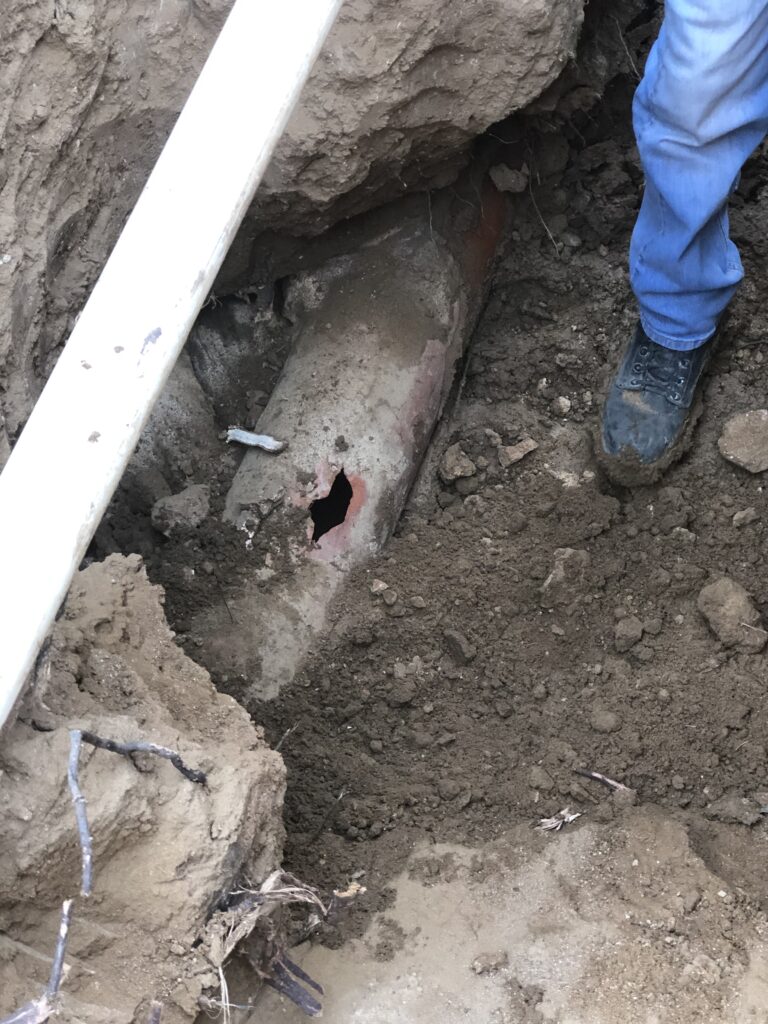
A cracked or separated sewer line leaks gas long before it ever leaks enough water to be obvious. Drain lines run under slabs, through crawl spaces, and out beneath your yard, and a hairline crack in any of those sections releases sewer gas into the soil, the crawl space, or the space under your flooring. From there it works its way into the house through gaps around plumbing penetrations, floor joints, and HVAC returns. The odor tends to be strongest low to the ground and often seems to come from everywhere at once rather than from one fixture. Homeowners frequently describe it as worse in the morning, since the house sits closed up overnight and gas accumulates. If your whole home smells faintly of sewage and no single drain is the culprit, the line itself deserves a look.
Several failure modes show up repeatedly in High Desert homes. Older properties with clay or cast iron sewer laterals develop cracks at the joints as the material corrodes or shifts. Tree and shrub roots hunt for moisture aggressively in dry soil and push into any crack they find, widening it every season and catching waste as it passes. Soil movement, poor original bedding, and heavy vehicle traffic over a line create bellies, which are low spots that hold standing waste and generate constant odor and repeat clogs. Construction and trenching for other utilities cracks lines more often than people realize. Even newer ABS systems fail when a fitting was never fully glued or a section was crushed during backfill. Every one of these produces the same early symptom: a smell without a visible leak.
You cannot diagnose this from the surface, and guessing gets expensive. A sewer camera inspection sends a waterproof video head through the line from a cleanout and shows the actual condition of the pipe, foot by foot, including cracks, root masses, offsets, bellies, and grease deposits. Locating equipment then pinpoints the depth and position of the defect from above ground, so any repair is targeted rather than exploratory. That single step is the difference between digging one small section and trenching an entire yard. If the camera comes back clean, you have ruled out the most expensive possibility and can focus on vents, seals, and buildup. Suspect a problem under your slab or yard? Click here for our sewer line inspection service to see inside your pipes.
Failing Toilet Seals and Septic Issues Cause Foul Drain Odors
A toilet is the largest opening into your drain system, and it depends on two seals to stay odor free. The wax ring or rubber gasket underneath compresses against the closet flange to create a gas tight and water tight connection to the floor. When that ring dries out, gets crushed, or shifts because the toilet rocks, sewer gas escapes around the base and into the bathroom. The telltale signs are a smell that is strongest at floor level near the toilet, a bowl that rocks slightly when you sit or lean, or discoloration on the flooring around the base. Corroded and broken flanges cause the same result and are common in older homes with cast iron. This repair is straightforward for a plumber, but it does require pulling and resetting the toilet, and cutting corners here just recreates the leak in a year.
Septic systems add another layer, and they matter a great deal around Phelan, Pinon Hills, Oak Hills, and Mariana Ranchos where many properties are not on sewer. A properly functioning septic tank should never produce odor inside the home; interior smells almost always trace back to plumbing rather than the tank itself. Odor outdoors is a different story. A strong sewage smell over the leach field, soggy or unusually green patches of ground during a dry High Desert summer, slow drains throughout the house, or gurgling in the lowest fixtures all point to a tank that is full or a field that is no longer absorbing. Most residential tanks need pumping every three to five years depending on tank size and household count. Skipping that schedule pushes solids into the leach field, which is the expensive failure nobody wants.
One more source confuses homeowners constantly, so it is worth naming. If the rotten egg smell only appears when you run hot water, the drain is not your problem; your water heater is. Sulfate reducing bacteria in well water can react with the magnesium anode rod inside the tank and generate hydrogen sulfide, which produces that unmistakable odor at every hot tap. The fix involves flushing and sanitizing the tank and often swapping the magnesium rod for an aluminum zinc alloy or powered anode. Cold water running clean while hot water stinks is the giveaway, and it takes ten seconds to test at any sink. Homes on private wells across the High Desert see this regularly, and it has nothing to do with your drains at all.
Why You Need Professional Drain Odor Detection in the High Desert
Drain odors are frustrating precisely because the smell rarely originates where you notice it. Gas travels along pipe chases, wall cavities, and crawl spaces, so the bathroom that smells is often not the room with the problem. Guessing leads to money spent on chemicals, gadgets, and repairs that fix nothing. A professional odor investigation replaces guesswork with actual evidence: cameras inside the lines, smoke and pressure testing to reveal escape points, and systematic elimination of each possible source. That approach finds the cause on the first visit in the vast majority of homes. It also catches serious issues, like a cracked lateral or a failing septic field, while they are still small.
What Professional Foul Drain Odor Detection Includes
A proper odor investigation starts with questions and a walkthrough, not tools. We ask when the smell appears, which rooms are affected, how long fixtures sit unused, and what changed recently in the home. Then we check the easy causes first: trap seals, strainers, disposals, cleanout caps, and washer standpipes. From there we move to venting, verifying that every stack terminates properly, is clear of debris, and pulls air the way it should. Each step either eliminates a cause or confirms one, so nothing gets replaced on a hunch.
When the simple sources check out clean, testing gets more precise. A camera inspection shows the true interior condition of drain and sewer lines, including cracks, roots, bellies, and heavy buildup. Smoke testing pushes safe artificial smoke through the drain system so escaping gas becomes visible at the exact point of failure, which is invaluable for finding hidden cracks inside walls and under slabs. Pressure testing isolates sections of pipe to prove where a system holds and where it does not. We document what we find and show it to you rather than asking you to take our word for it.
The final piece is a repair plan you can actually act on. That plan spells out what is causing the odor, what it will take to fix it, what can wait, and what cannot. Sometimes it is a fifteen dollar air admittance valve; sometimes it is a section of sewer lateral. You get a free, no obligation estimate either way, with pricing explained before any work begins. Our technicians work on a non commission basis, so nobody has an incentive to sell you a repair you do not need. You decide what happens next.
How Drain Cleaning Removes Foul Odors Coming From Your Drains
Once the source is confirmed, cleaning the lines properly is what makes the smell stay gone. Cabling a drain punches a hole through a clog and restores flow, but it leaves most of the grease and biofilm on the pipe wall, which means the odor returns as soon as the layer regrows. Hydro jetting takes a different approach, using high pressure water through a specialized nozzle to scour the full interior circumference of the pipe back to bare wall. That removes grease, soap scum, scale, sludge, and root hairs in one pass. It is the difference between clearing a path and actually cleaning the pipe.
Hydro jetting is also the right answer for recurring problems rather than one time backups. Kitchen lines coated in years of cooking grease, laundry lines packed with lint and detergent residue, and main lines with heavy buildup all respond well to jetting. A camera pass before and after confirms the line is genuinely clear instead of just flowing again. We check pipe condition first, because badly deteriorated cast iron or clay needs a different plan and we will tell you that up front. Doing it right protects the pipe as much as it cleans it.
Maintenance keeps you out of the cycle entirely. Flushing rarely used drains monthly, cleaning the disposal splash guard, keeping grease out of the sink, using hair catchers in showers, and scheduling a jetting service on kitchen and main lines every few years handles nearly every odor problem before it starts. Households with large families, frequent entertaining, or older piping benefit most from a regular schedule. Summer is the ideal time to get ahead of it, since heat is when buildup and evaporation both peak. A little maintenance now costs far less than an emergency call in August.
Why Choose Rescue Plumbers Inc for Foul Drain Odor Detection
Rescue Plumbers Inc is a family owned and operated plumbing company based at 6083 Lindero Rd in Phelan, with 15 years of experience serving the High Desert. We work in these homes every day, which means we know how local conditions cause local problems: extreme dryness that empties traps, hard water that feeds scale, well water that turns water heaters sour, and the septic systems that so many properties here depend on. That familiarity saves time on diagnosis, and time is what you are paying for. We are licensed and insured, and we carry the professional credentials to back up the work. You get a real human on the phone, not a call center.
Our technicians do not work on commission, and that shapes every conversation we have with you. There is no upsell script and no pressure to approve a repair you did not need. Estimates are free, no obligation, and explained in plain language before anything starts. If the answer is a dry floor drain and a pitcher of water, we will tell you that and show you how to prevent it. If the answer is a cracked sewer lateral, we will show you the camera footage.
We serve Phelan, Pinon Hills, Oak Hills, Wrightwood, Hesperia, Victorville, Apple Valley, Adelanto, Spring Valley Lake, Helendale, Oro Grande, Lucerne Valley, Barstow, and Mariana Ranchos. Call us at (760) 241-3100 or email fixit@rescueplumbersinc.com to schedule an odor inspection. A sewer smell in your home is not something to live with through a High Desert summer, and it is rarely as complicated to solve as it feels. Let us find it, fix it, and get your house smelling like a house again.