
Why A Water Heater Inspection Matters Before Winter
Winter shows up early in the High Desert, and it shows up hard. Nights in Phelan, Pinon Hills, and Wrightwood slide below freezing weeks before most homeowners think about their plumbing. A water heater that carried your household through July can struggle badly in December, because the incoming water is far colder and the unit has to work much harder to reach the same temperature. Sediment that built up all year sits at the bottom of the tank and insulates the burner from the water it is supposed to heat. Safety parts like the temperature and pressure relief valve, the flue, and the gas control valve rarely fail on a mild afternoon; they fail during the longest burner cycles of the year. A water heater inspection before winter catches those problems while the weather is still cooperating and while parts are still easy to source. It also gives you a clear picture of how much life your tank has left, so a replacement happens on your schedule instead of on a freezing Sunday morning. Below is what the inspection covers, what winter does to a water heater in the Victor Valley, and how to decide what comes next.
What A Water Heater Inspection Covers Before Winter
A real water heater inspection is more than a quick look at the tank. It is a system check that follows the water in, the heat source, the venting, and the pressure controls that keep everything in balance. The plumber starts at the cold inlet and the shutoff valve, moves through the burner or the heating elements, and finishes at the relief valve and the vent. Every component gets checked for corrosion, leaks, scale, and wear. Gas units get a combustion and draft check, because a blocked or disconnected flue can push carbon monoxide into living space. Electric units get element and thermostat testing, along with a look at wiring connections that loosen over years of heating and cooling cycles. Tankless units get a descaling review plus a check of the isolation valves and the inlet filter screen. The result is a clear picture of the unit’s condition, its remaining service life, and the repairs that will carry it through the cold months.
The Safety Checks In A Water Heater Inspection Before Winter
The temperature and pressure relief valve is the first stop, and it is the single most important safety device on the tank. That valve is designed to open if the water inside climbs past roughly 210 degrees Fahrenheit or if pressure exceeds 150 psi. When it sticks shut, the tank becomes a pressure vessel with no escape path. When it weeps constantly, it usually points to a pressure problem somewhere else in the house. The discharge tube attached to it has to run downward and terminate within six inches of the floor or an approved drain, with no threads on the end and no reduction in size. Plumbers see that tube capped, plugged, or routed uphill more often than homeowners would believe. A technician tests the valve, inspects the tube, and confirms the mineral crust that builds in hard water has not welded the seat in place. Any valve older than five years that has never been exercised deserves close attention before winter demand starts.
Gas connections get a careful review during the same visit. A leak detection solution goes on the flex connector, the shutoff valve, the union, and the gas control valve body, and any bubbling means the joint needs service before the burner runs another cycle. Sediment traps, sometimes called drip legs, are checked for correct placement ahead of the control valve. Clearance around the unit matters just as much, since stored paint, gasoline cans, and cardboard boxes crowd the average garage installation over time. Units built after 2003 use flammable vapor ignition resistant designs with a sealed combustion chamber and a flame arrestor screen, and that screen clogs with lint and dust. Older units without that protection still need any ignition source raised 18 inches above the garage floor. California code also requires seismic strapping at two points, one in the upper third of the tank and one in the lower third, with the lower strap kept at least four inches above the gas controls. Loose straps, missing straps, and plumber’s tape used as a substitute all show up during a proper inspection.
Temperature setting is the last piece of the safety review, and it affects both scald risk and energy use. The Department of Energy recommends 120 degrees Fahrenheit for most households, which limits burn risk for children and older adults while still handling normal demand. Many units leave the factory set higher, and homeowners raise them further during cold months to compensate for a tank that is already failing. That habit hides the real problem and raises the odds of a scald injury at the sink. A technician verifies the actual delivered temperature at a fixture rather than trusting the dial, since a worn thermostat can read one number and produce another. Carbon monoxide alarms in the home get confirmed at the same time, because a gas water heater sharing a flue with a furnace can spill combustion gases once heating season begins. Drain pans and pan drain lines are inspected for cracks and blockages. Small details like these are what separate a checklist visit from an inspection that actually protects the house.
The Sediment And Hard Water Steps In A Water Heater Inspection
Water across Phelan, Hesperia, Victorville, and Apple Valley carries a heavy mineral load. Calcium and magnesium drop out of solution as water heats, then settle at the bottom of the tank in a layer that hardens over time. On a gas unit, that layer sits directly between the burner flame and the water, forcing the burner to run longer to move the same amount of heat. On an electric unit, sediment buries the lower element and burns it out early. The popping and rumbling sound many homeowners describe is steam escaping from underneath that mineral crust. Left alone, the buildup can consume several inches of usable tank capacity and cut efficiency noticeably. Flushing the tank removes loose sediment through the drain valve and restores some of that lost performance. In this region, an annual flush is a minimum, and homes without softening or filtration often benefit from two.
The anode rod is the part most homeowners have never heard of and the part that decides how long the tank lasts. It is a magnesium or aluminum rod threaded into the top of the tank that corrodes on purpose so the steel does not. Once the rod is consumed down to the core wire, the tank lining becomes the next target and rust begins working through the steel. Hard water accelerates that process, which is why tanks in the High Desert often age faster than the same model installed near the coast. An inspection includes pulling or at least evaluating the rod based on age and water conditions. Replacing a spent rod costs a fraction of replacing a tank, and it can add years of service. Smelly hot water with a sulfur odor frequently traces back to a reacting anode rather than a plumbing failure. A technician can recommend the correct rod material for your water instead of guessing.
Tankless units need a different approach, but the underlying enemy is the same. Scale builds inside the heat exchanger where water passes through narrow channels at high temperature. As those channels narrow, flow drops, error codes appear, and the unit short cycles during long showers. Descaling circulates a cleaning solution through the exchanger using the isolation valves installed at the unit, and it typically takes under an hour. Homes on hard water should plan on this service once a year, sometimes more with heavy use. The inlet filter screen also collects grit from the supply line and needs rinsing during the same visit. Skipping descaling voids warranty coverage on many tankless brands, and manufacturers ask for maintenance records when a heat exchanger claim comes in. Getting it done before winter means the unit enters its busiest season with full flow capacity. Ready to get ahead of the cold before the schedule fills up? Click here for our water heater inspection service.
The Pressure And Venting Points Of A Water Heater Inspection Before Winter
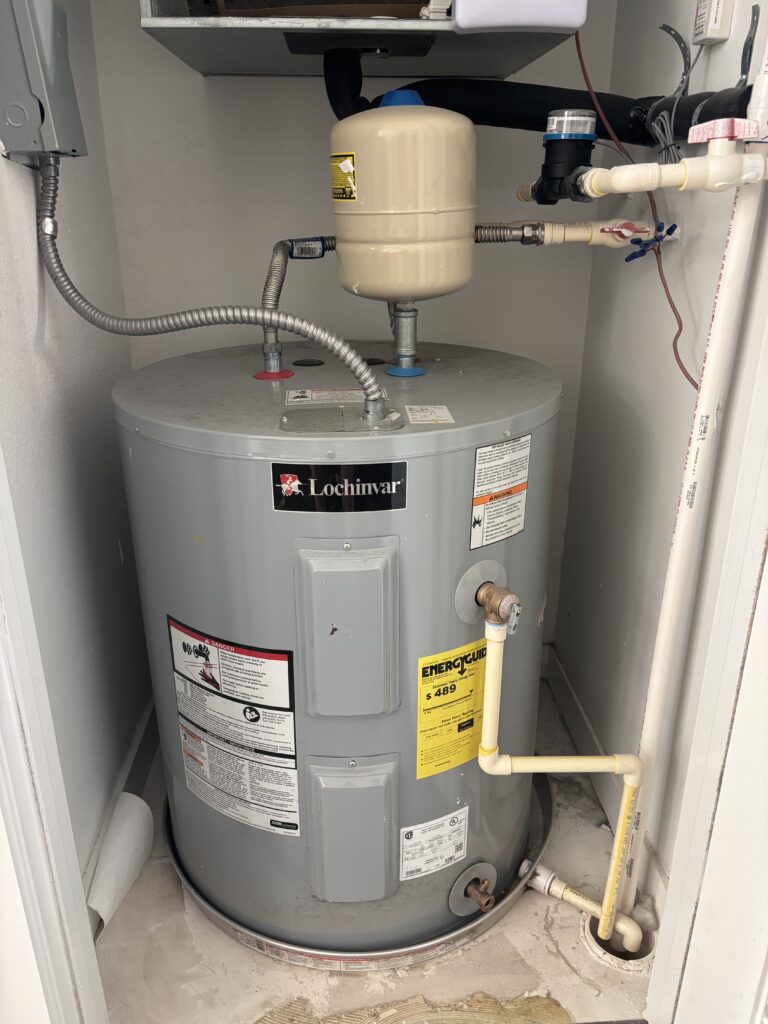
Thermal expansion is a quiet problem that damages water heaters from the inside. Water expands as it heats, and in an open system that extra volume pushes back into the city main. Homes with a pressure regulator or a backflow preventer have what plumbers call a closed system, and the expanded water has nowhere to go. Pressure spikes then hammer the tank, the relief valve, and every fixture in the house. An expansion tank absorbs that volume through an air bladder, but only when its precharge matches the static water pressure at the home. A technician measures incoming pressure with a gauge, checks the precharge at the expansion tank’s air valve, and adjusts it as needed. A waterlogged expansion tank feels heavy and does nothing, and it is a common find on units more than five years old. Static pressure above 80 psi calls for a regulator review as well.
Venting is where gas water heater problems turn dangerous. Atmospheric units rely on natural draft, meaning hot combustion gases rise through the draft hood and out the flue on their own. Any obstruction, disconnected section, or excessive horizontal run interrupts that draft. Rust flakes on top of the unit, scorch marks near the draft hood, and moisture on nearby surfaces all suggest spillage. A draft test at the hood confirms the vent is pulling correctly while the burner fires. Newer homes are built tighter, and exhaust fans or a running dryer can pull enough air to reverse the draft in a closet installation. Combustion air openings need to be clear and correctly sized for the space. Winter makes this worse, because closed windows and longer burner cycles increase both the risk and the exposure time.
The plumbing connected to the tank rounds out the review. Dielectric unions or approved connectors separate dissimilar metals at the hot and cold ports, since copper joined directly to a steel nipple corrodes at the joint. Flex connectors get inspected for kinks, corrosion, and the green crust that signals a slow leak. The cold side shutoff valve is exercised, because a gate valve that has not moved in a decade rarely closes when it matters. Pipe insulation on the first several feet of hot and cold line reduces standby loss and helps in unheated spaces. Recirculation pumps and timers get checked for correct operation, since a pump running constantly burns energy and wears the tank. Leaks anywhere along this run leave mineral trails that a trained eye picks up quickly. Catching a weeping connection now avoids water damage later, when a small drip freezes and splits a fitting.
How Winter Weather Changes Water Heater Performance In The High Desert
Cold weather does not simply make a water heater work a little harder; it changes the math the unit was sized around. Groundwater temperature falls, recovery time stretches, and the same 50 gallon tank suddenly delivers fewer usable minutes of hot water. Households also use more hot water in winter, with longer showers, more laundry, and holiday guests. Elevation adds another factor across Wrightwood, Pinon Hills, and Oak Hills, where overnight lows sit well below freezing for weeks. Garages, exterior closets, and crawl spaces that stay comfortable most of the year become freeze zones. A unit already running at the edge of its capacity in October has no margin left by January. Understanding these winter pressures explains why so many failures cluster in the coldest six weeks of the year. It also explains why an inspection now pays off later.
Cold Ground Water And Winter Water Heater Performance
Incoming water temperature drives everything a water heater does. During summer, supply water in this region often arrives around 70 degrees Fahrenheit, so reaching a 120 degree setpoint requires a 50 degree rise. In deep winter, that same supply can arrive near 45 or 50 degrees, pushing the required rise to 70 or 75 degrees. That is roughly a 50 percent increase in the work the burner or elements must perform for every gallon. Recovery rate, which measures gallons heated per hour, falls in direct proportion. A tank rated for 40 gallons per hour of recovery in mild conditions may deliver closer to 28 in January. Nothing broke; physics simply changed the terms. Homeowners feel it as showers that run out sooner than they used to.
The first hour rating printed on the yellow energy label tells you how much hot water the unit can deliver in one busy hour starting from a full tank. That figure combines storage capacity with recovery rate, so a drop in recovery pulls the whole number down. Two back to back showers plus a dishwasher cycle can exhaust a marginal unit before the last person is finished. Families often respond by turning the thermostat up, which delivers hotter water but also increases scald risk and speeds up scale formation. A better answer is finding out why the unit lost capacity in the first place. Sediment, a failed lower element, a cracked dip tube, or a worn gas control valve all reduce usable output. An inspection identifies which one is responsible. Repairs made in fall restore the capacity you already paid for.
Tankless units feel cold groundwater differently but just as clearly. These heaters modulate flow to hit a target temperature, so a lower inlet temperature means less water can pass through per minute. A unit that supplied 6 gallons per minute in August may only manage 4 in January, and running two fixtures at once becomes impossible. Scale inside the heat exchanger compounds the loss and pushes the unit toward error codes. Homeowners often assume the heater is failing when it is simply working within its winter limits and needs service. Descaling and a correct gas supply review usually resolve the complaint. Sizing matters too, since a unit chosen for a mild climate rating will disappoint in a high desert winter. A professional evaluation clarifies which situation you are dealing with.
Freezing Risk And Winter Water Heater Performance In Garages And Crawl Spaces
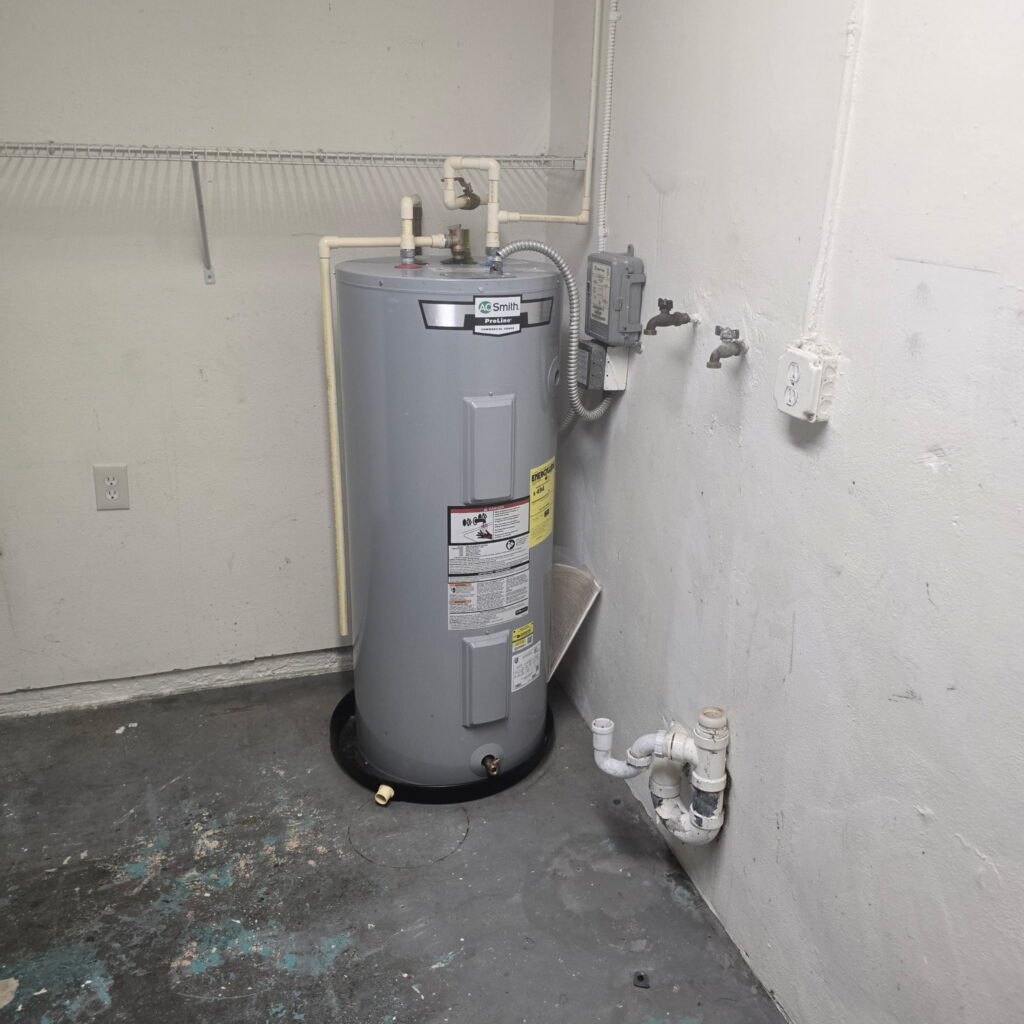
Location determines how much freeze risk a water heater carries. Units in a heated hallway closet rarely have trouble, while units in an unheated garage, an exterior closet, or a vented crawl space live in outdoor conditions. Overnight lows in Wrightwood and Pinon Hills reach the teens during cold snaps, and a garage with an uninsulated door tracks close behind. Water inside a tank rarely freezes because the burner keeps cycling, but the piping around it is a different story. Cold and hot lines running along an exterior wall are the usual failure point. Insulating those first several feet of pipe is inexpensive and effective. Pan drain lines and relief valve discharge tubes routed outside can freeze solid and block the exact path pressure needs. Checking those routes is part of a thorough inspection.
Tankless units installed outdoors or in unconditioned spaces rely on internal freeze protection that only works with power applied. Turning off the breaker during a vacation or losing power during a storm removes that protection entirely. Manufacturers build in small heating elements around the heat exchanger, and they draw very little electricity, but they need a live circuit. Homeowners who shut everything down before a winter trip sometimes return to a cracked exchanger and a flooded wall. Isolation valves with drain ports allow the unit to be drained properly when extended shutdown is unavoidable. Condensing models add a condensate drain line that can freeze if it runs through unheated space without proper slope or insulation. These details get verified during a service visit. They cost nothing to address in advance and thousands to ignore.
Combustion air behaves differently in cold weather as well. Dense winter air changes the air to fuel mixture slightly, and units with partially blocked flame arrestor screens or dirty burners struggle to light cleanly. Repeated ignition attempts wear the igniter and the gas valve. Wind at higher elevations can also affect draft on an atmospheric vent, pushing exhaust back down the flue during gusts. Proper vent caps and correct vent height above the roofline reduce that problem. A technician looks at the whole venting path rather than just the connection at the unit. Cleaning the burner assembly and the arrestor screen restores reliable ignition. Doing that work before the first hard freeze is far easier than doing it during one. Already noticing lukewarm showers, a pilot that will not stay lit, or rumbling from the tank? Click here for our water heater repair service.
Holiday Demand And Winter Water Heater Performance
Household hot water demand peaks between November and January. Guests arrive, showers stack up, laundry volume climbs, and the dishwasher runs more often than any other month. A rough planning figure is about 20 gallons of hot water per person per day under normal use, and holiday hosting pushes past that quickly. A 40 gallon tank that suits a family of three will not comfortably serve six people over a long weekend. Recovery rate becomes the limiting factor, since the tank has to reheat between uses while inlet water is at its coldest. This is exactly when a unit with reduced capacity announces itself. The complaint is almost never gradual; it arrives all at once with a houseful of people.
Simple scheduling helps more than most homeowners expect. Spacing showers 20 to 30 minutes apart gives a gas tank time to recover a meaningful volume. Running dishwasher and laundry cycles late at night keeps them out of competition with morning demand. Repairing dripping hot water faucets removes a constant drain on the tank. Lowering the thermostat is not the answer during high demand, though raising it above 120 degrees introduces scald risk that outweighs the small gain. Mixing valves offer a safer way to store hotter water while delivering a controlled temperature at fixtures. A plumber can advise on that option for your specific setup.
Sometimes the honest answer is that the unit is undersized for how the home is now used. Families grow, bathrooms get added, and a soaking tub installed during a remodel can hold more water than the entire tank. If the heater is also nearing the end of its service life, replacing it with a correctly sized unit solves two problems at once. Higher recovery models, larger tanks, and properly sized tankless systems all have a place depending on gas supply, venting, and budget. Getting the sizing calculation right matters more than the brand on the label. A load review considers fixture count, occupancy, and peak hour demand. That conversation goes much better in October than on a December morning with cold water running.
Why You Need A Water Heater Inspection Scheduled Before Winter Arrives
Emergency calls cost more, take longer, and leave you with fewer options. Parts availability tightens during cold weather, and the units that fail first are usually the ones that showed warning signs months earlier. Scheduling an inspection now puts you in control of the timeline and the budget. You get a written condition report, a clear list of what needs attention, and an honest answer about how much life the tank has left. Repairs made early keep a small problem from becoming water damage across a hallway floor. Planning a replacement in advance also means you can compare options instead of accepting the first available unit.
What To Expect When You Schedule A Water Heater Inspection
The visit starts with a conversation about how the system has been performing. Details like showers running cold sooner, rumbling sounds, discolored water, or a higher gas bill point the technician toward specific components. From there the physical inspection follows the water, the fuel, the venting, and the pressure controls in order. Testing includes the relief valve, the thermostat accuracy, the expansion tank precharge, and the incoming static pressure. Gas units add a draft and combustion check, while electric units add element and thermostat continuity testing. Most inspections take under an hour on a standard residential unit.
You receive a plain explanation of what was found, with photos where they help. Items are separated into safety concerns, efficiency issues, and normal wear that can be monitored. Nothing gets added to the list to pad an invoice, because our technicians work on no commission. Pricing for any recommended repair is given up front before work begins. You decide what happens next, and you are welcome to take time with that decision. Estimates are free and carry no obligation.
Documentation from the visit is worth keeping. Manufacturers often require proof of maintenance for warranty claims on tanks and heat exchangers. A record of flushes, descaling, and anode replacement supports those claims and helps at resale. It also builds a history that makes future service faster and more accurate. Homeowners who track this information tend to replace units on their own terms rather than during a failure. That single habit saves real money over the life of a home.

When To Repair Or Replace After A Water Heater Inspection
Age is the first factor in the decision. Standard tank water heaters typically last eight to twelve years, and hard water pushes many units toward the lower end of that range. Tankless systems often reach 20 years with regular descaling. A unit past a decade with multiple failing components rarely justifies a large repair investment. One that is six years old with a bad thermocouple or a worn element is an easy repair. The serial number on the data plate usually encodes the manufacturing date when the label is unclear.
The nature of the problem matters just as much as the age. Thermocouples, igniters, gas control valves, heating elements, thermostats, relief valves, dip tubes, and anode rods are all replaceable parts. Water coming from the tank body itself is not repairable, because that means the steel has rusted through from the inside. Rusty or brown hot water often signals that the anode is gone and corrosion has started. Persistent leaks at fittings can usually be corrected, but a wet spot under the tank generally means replacement.
Efficiency belongs in the calculation as well. An older unit carrying heavy scale can waste a noticeable share of the fuel it burns, and that shows up every month on the bill. Newer models meet stricter efficiency standards and often include better insulation and improved burner design. Correct sizing during replacement solves capacity complaints that no repair could fix. Venting, gas line capacity, and space requirements all factor into which unit fits your home. A licensed plumber walks you through those tradeoffs without pressure. Tank at the end of its life and ready to plan the swap? Click here for our water heater installation service.
Why Choose Rescue Plumbers Inc For Your Water Heater Inspection
Rescue Plumbers Inc is a family owned and operated company serving Phelan, Victorville, Hesperia, Apple Valley, Adelanto, Oak Hills, Pinon Hills, Wrightwood, Spring Valley Lake, Helendale, Oro Grande, Lucerne Valley, Barstow, and Mariana Ranchos. We have worked on High Desert water heaters for 15 years, so we know exactly what this water does to a tank and how these winters test a system. Our technicians are licensed and insured, and they work on no commission. That means the recommendation you receive is based on the condition of your equipment, not on a sales target. Estimates are free and carry no obligation.
You will talk to a real person when you call, and the technician who arrives will explain what he found in language that makes sense. We show you the worn part, the pressure reading, or the sediment we pulled from the tank rather than asking you to take our word for it. Repairs are quoted before work starts. If a replacement is the honest answer, we say so plainly and give you the reasoning behind it. If your unit has years left, we tell you that too.
Getting the inspection on the calendar before the first cold snap is the easiest plumbing decision you will make this year. Fall schedules fill quickly, and emergency slots in December cost more and offer fewer choices. Call Rescue Plumbers Inc at (760) 241-3100 or email fixit@rescueplumbersinc.com to book a water heater inspection. You can also reach our office at 6083 Lindero Rd, Phelan, CA 92371. Local service, professional credentials, and straight answers are what we bring to every appointment.